Featured

First Place: Dugout by Emma Oldham

I spread my legs, drawing up my sarong, the colour of burnt dust, past my thigh. The 

fabric clings to my skin, wet with sweat. Every Friday, Nikola takes the long way home, circling the brittle edge of our camp in Coober Pedy like a dingo sniffing heat. Nothing’s pretty in this part of Australia. But underneath this stained cotton, something glows. His weekly tease.

The heat is horrendous. Ngunytju, mother, says heat like this used to be a season. Now, it’s a sentence. It’s 5.4 degrees hotter now than when she wed beneath the same red sky. She tells me, voice gone soft, that it could warm another seven degrees by the time the babies I bring into this world are old enough to marry. Her voice goes dry when she says it, like the thought has scorched her tongue.
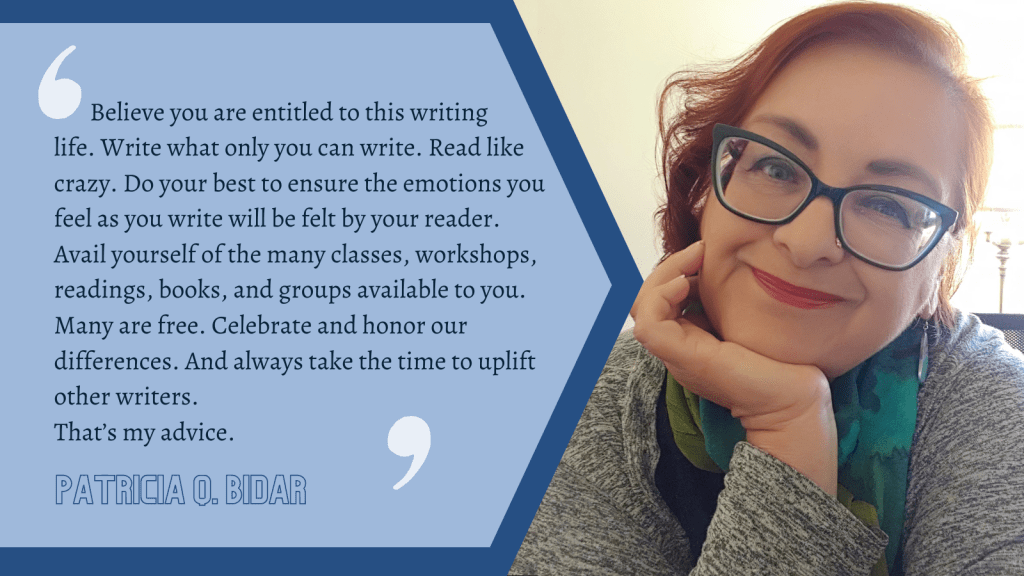
Nikola loves it when I sweat like this, dark clumps of moisture pooling under my breasts and around my collarbone. He lingers by the door frame, now ripped off its hinges, yawning to let the stale breeze wander through our shack of tin and crumbling cement. It does little. But it gives him a good view.

My bedroom runs parallel to the door—a theatre box. I pull off my top, slow like melted sugar, and let my breasts breathe. In their prime, full and round, they still defy the world’s attempts to flatten them. I lick a finger and draw it down between them. Nikola licks his lips. He thinks this is all for him.

I never let him cross the threshold. This illusion would shatter. But then again, would a rich white boy like him even notice my history, sweating from the walls? We keep our distance. That’s what makes this last. Our ritual. We’ve been maturing together for years, a private show of watching, imagining, blossoming, aching. The tease gives me enough dopamine to forget the clay oven I’m dying in.

When it’s his turn to perform, he gives me the signal. A stone kicked just so against the wall of my shack. When I walk to him, it’s only when the sun has dipped far enough to let my skin survive the journey.

His family lives below. A ‘dugout’, he calls it, slow and soft in that syrup-thick accent of his. His parents’ home is a cool and carved luxury tomb. Always the same, perfect temperature. His father, a miner with an artistic streak, has carved out entire rooms in the rock. Bathrooms echo with marble, there is a games room and a cinema den. This is the kind of space that doesn’t just shelter, it forgets. Forgets the heat. Forgets hardship. Forgets us.

Nikola once said, half-laughing, “It’s like living in the future down here.” He didn’t see me flinch. His future doesn’t include melting skin.

The first time I stepped inside, I imagined falling into a castle. Door after door after door. And there he was, my Nikola, framed in an arched doorway, trousers dropped to the floor, boxers slipping with teasing grace. His hands around himself, moaning my name like a prayer. I fantasised about the day I would feel him inside me. Take me here, I thought, in this dugout, where my body can surrender to your cold walls and floor. I imagined the moans, a potent mix of pleasure and climactic relief. 

But to step forward would be to admit the imbalance. That his hunger comes from desire, and mine from distraction. Because in his underground world, his heat is a fantasy. Above ground, mine is death. The sun kills us in slow punishment.

Mum’s good friend, Nyangka, died just last week. Her heart gone wrong. Heat’s cruel kiss. The health worker said it was linked to “ongoing extreme temperature exposure”. But we already knew. We’ve known for years.

Above, we’re not on the grid. We rely on diesel generators and intermittent solar. Air con exists. Sure. But it’s for the rich, or the ones with money from opals or tourists. 

Nikola’s visits stretch longer between each visit now. Ngunytju, spending more time at the Umoona Tjutagku Health Service, where the air con never dies and the water is free. She goes there most days late in the afternoon, when her breathing feels too hard. The worry dries me out. And I think: if I stay too long in this limbo, watching the man I can’t touch while my mother wilts in silence, what will be left of me?

So when Nikola still comes to linger at my doorway, not tiring of my body as it shifts, widens to carry life, hair curling where skin once gleamed, it keeps me alight. But he never sees the suffering beneath my shimmer. He sees the shape of my breasts, not the politics in my sweat. Nor the resistance in my thighs. 

He sees a show. An escape from his air-conditioned guilt. And I drank it in. I watch him watching me, and weigh his gaze like gold dust in a prospector’s pan. Will it ever be enough?

I, too, need an escape. I go inward. Dig deep, into my own place where heat can’t destroy me.

Where the sweat and ache of me are not symptoms, but power. I sink my fingers into myself, feeling the wet bloom, never looking away from Nikola’s dark, hungry eyes.

And in that moment, I am not forgotten. I am fire.

I am my old people’s dream.

I am my country, still burning.

Still alive. I am not done yet.


There’s something apocalyptic about Dugout, something shocking, that heat that fills us with fear, but class pride also emerges, and there are echoes of colonialism and privilege, without falling into victimhood or surrender. This is a sensual story, where the senses take on enormous importance: the author makes us feel the heat and the cold, also the play of desire that breaks all authority and social distance, the power, the abundance of pleasure, and the saying, “Here I am, here we are, they haven’t been able to destroy us yet”.

María Fernanda Ampuero

“Dugout” enforces a strong gravitational pull, engaging in its language and unique and uncanny premise. Its rhythm and pacing and the shadows of life and identity provide a powerful look into what it means to exist as human through the isolating factors of the physical and the spiritual. Symbolic and profound in its layering, leaving a loud exhalation at the end. 

Shome Dasgupta

Featured

Second Place: Diva by Cate McGowan

She didn’t sweat. That was the first thing I noticed about her.

This was Georgia in July. Church fans fluttering like moth wings, sundresses sticking to the small of your back. Pews tacky to the touch. But that girl, that new girl in the peach dress, stayed dry as chalk. No pit stains. No shine on her lip. Nothing.

She wore that same peachy-pink dress every day of music camp. It didn’t look expensive—just clean like it had never touched dirt. So we started calling her Peach Dress, not to her face, just among ourselves. It was easier than using her name. Nicknames helped with distance.

‘She’s not from around here,’ my cousin Willa told me. Like that explained everything.
We were sitting on the slate steps of the rec center, our choir folders laid flat between us like little shields.

‘Chicago,’ Willa added. ‘You can tell.’ She made it sound like a diagnosis. ‘Came down to stay with her aunt. You can tell she thinks she’s better. A diva.’ 

I didn’t know what a diva was. And I didn’t know if Peach Dress thought she was better than us or not, only that Willa’s words gave us permission. My cousin could make anything sound like an insult—Chicago, visiting aunts. 

Peach Dress never joined in during lunch. She brought her own food in neat little Tupperware, fruit slices without any brown spots. She sat alone by the chain-link fence, reading from a book with no title on the cover.

That dress was perfect every day, which seemed strange. Even my Sunday best came home with at least one Kool-Aid stain or bug squish. And the way she sang. That was the other thing. She had a voice like honey on glass. Not syrupy, not fake. Just clean. Just still.

‘She fixes her vowels,’ someone said once. ‘Like she’s in the opera or something.’

We were supposed to be preparing for the Youth Jubilee. Three songs. A skit about the loaves and fishes. Sister Jolene said it was about witnessing, but it felt more like a pageant to me. We were all supposed to blend. Wear the same T-shirts. Be the same joyful sound.

But Peach Dress wouldn’t blend. Wouldn’t even pretend.

It was Willa’s idea to talk to her. ‘She’s gotta be confronted,’ she said. The way Willa said ‘confronted’ made my stomach pull.

Four of us followed her—me, Jacey (who always picked her mosquito bites), and the twins, who didn’t count as two unless they were arguing.

We caught her behind the church kitchen, where the dumpsters buzzed with flies. It smelled like old bananas. 

When Peach Dress came around the corner, she didn’t flinch. She stopped as if she’d been expecting us.

‘You got something to say?’ Willa asked.

‘I don’t even know you,’ Peach Dress said. She wasn’t scared. I remember that.

‘You don’t like how we sing,’ Willa said, leaning in, folding her arms tight.

‘I never said that.’

‘You said we were flat. You told Sister Jolene.’

‘I was trying to help.’

‘Well, you don’t belong here,’ Willa said.

Peach Dress didn’t answer.

‘You think you’re better than us.’

‘No,’ Peach Dress said. Her voice didn’t rise or shake, which somehow made it worse. She just stood there, hands at her sides, fingers curled like she was holding something. Invisible strings, maybe. A thread she wouldn’t let us cut.

I didn’t say anything. My hands were sweaty on the edge of my shorts. I kept thinking about how Peach Dress had smiled during warmups, not big, just polite. Like we were all noise, and she was something tuned.

Willa reached out and tugged the hem of her dress. Not hard, not enough to rip, just enough to leave a mark, like a smudge on a canvas. The fabric fell back into place.

Peach Dress stepped away. Her eyes flicked to each of us. She didn’t cry. She didn’t speak. She just turned around and walked off like it was finished.

Nobody said much after that. We watched her go, and the cicadas trilled in a high register, filling in the silence. Somebody kicked a pebble.

Later that night, after supper, my mother made me shower again and brush out my hair even though I was going straight to bed. She said I’d tracked in too much red clay and shame.

‘I got a phone call. Heard you and Willa had quite the conversation with the new girl.’

‘She doesn’t fit in,’ I said, and my pronouncement sounded small even as I said it.

My mother handed me a towel. ‘What’s that supposed to mean?’

I didn’t answer. I didn’t have the words.

At the Jubilee, Peach Dress sang ‘This Little Light’ like it was a secret. Her voice didn’t waver or swell; it just stayed, steady and whole. When she hit the last note, the room got so quiet you could hear the AC kick on. Then came the clapping. Not wild. Not polite. Something else. Everything was silent in the center, like a spoon balancing on its edge.

After, while the grown-ups folded chairs and slapped mosquitoes, while we kids packed up our sheet music, I saw Peach Dress outside, standing in the patch of sun near the swings, her dress glowing like a lamp. I thought about going over, about saying sorry or at least something.

But I didn’t.

Instead, I went home and wrote ‘Peach Dress’ at the top of a blank page in my notebook. I wrote her real name under it. I spelled it right, underlined it twice.

Not because I thought it would fix anything.

Just because I wanted to remember that I had seen her. And that she saw me.  


In “Diva,” the combination of vivid imagery and subtle characterizations of what is being told between the sentences make for a resonating coming-of-age story, one that echoes in nostalgia of growing up, taking us back and filling our memories of solitude and  power—a time in our lives when sticking out against the many requires bravery and fortitude.

Shome Dasgupta

I’ll never forget that peach dress, nor the apparent simplicity—in the language, in the plot—with which the author tells us this tiny story, this story that neither begins nor ends with the narrative, but that, somehow, allows us to get to know the characters beyond the words: we have been those characters. Diva is a story that, at times, reminded me of Carson McCullers and, at times, reminded me of myself envying—and falling in love with—the girl with the perfect dress and the perfect voice, the girl who does everything right versus the catastrophic, small-town girl. I loved it.

María Fernanda Ampuero

Business Stock photos by Vecteezy
Featured

Third Place: Beneath the Judas Hill by Glyn Matthews

Maggie Shaw lived below a bleak escarpment, hard against an unforgiving sky. A sore rib jutting from the Pennines, a shaper of winds. A place where Judas might have hanged himself. A place where ravens come to die.

She was born there, helpless as any child. She lived and died by candlelight, departing as she began, in a low-beamed room below a heavy roof, against the whale-backed hill, snuffed out where she began, although, this time, alone. Raw-rubbed soil tattooed her hands, stilled only when they placed her in her narrow grave.

Her eyes were bleached by summer heat and winter rain and all she’d ever seen since first peeping round her mother’s skirts. For her first shoes she wore a pair of hobnail boots, chafing hand-me-downs that made her drag her heels. When she cried, she was told to be grateful, even the Lord went barefoot as a child, so how could she dare to ask for more? Even when she learned to lace and tie them, there was no mistaking her ungainly walk. So, she wore them only when the weather turned and froze the milk in pail. Otherwise she took comfort in her saviour and followed His example. 

Kneeling by her bed at night, she prayed, her forehead pressed against a crocheted remnant of a grandmother she’d never known. She prayed for a sister to share her life, but none ever came. Perhaps God never heard her or perhaps simply didn’t care for childish prattling. Perhaps she was undeserving of a loving God. And so she pressed her hands together until her knuckles showed white and prayed all the harder in case it was the grasping wind had kidnapped all her wild imaginings. Then she climbed into bed, made a cave, warmed with her breath, nursed her tender bones and traced the grainy pattern the floorboards had imprinted on her knees.

Through childhood summers her gutter rhymes followed tails of shitting cows to milking, skipping round pats of steaming muck behind a swaying lullaby of hat-rack hips and buzzing flies. During February’s flat-iron days, steaming bovine nostrils plumed the air and urine froze in solid runnels on the track. 

She accepted the numbing repetition of the daily round. But her kitchen lyrics died the day her mother’s back was broken in the heaving byre and her father relied more heavily upon her services.

She rammed the posser up and down, cranked the handle of the mangle round and round and hung her father’s shirts to dry then brushed the stone-flagged parlour floor around her mother’s useless feet, conducted by the frantic wringing of her hands. She’d ignored her mother’s desperation as she swept beneath her chair. She swore at pigs that stared her in the eye when she dared set foot inside their filthy sty. She filled her wooden pail with steaming milk, squeezed by chilblained hands from dangling teats of white-eyed cows she learned to hate. 

Each raw-boned spring in draughty sheds, she stood in fetid straw and dragged new-born lambs from steaming wombs and watched the dozy mothers eat the bloody afterbirths. She stripped the skin from the still born, to swaddle bleating orphans to dupe the lambless ewes. She wiped war-paint across her sweating face from bloodstained hands and stood gasping in the doorway, a crazed midwife, cursing. She kneaded dough for daily bread and mended fences and dry-stone walls. She separated curds and mating dogs and killed young foxes with the back of spades. She fed the earthbound hens with corn and cursed the raucous cockerel with its flaming comb and was glad when her father took a mattock to its neck. 

But then her father took the mattock to her mother one hot and sleepless summer’s night, and she was left, after the assizes, with the farm complete and completely to her own devices. 

She didn’t ponder long her change of circumstance, as jobs needed doing, just the same. She shut her mind and got on with it. She prayed no more but from her narrow bed stared blankly at the ceiling in the gathered dark. From her mother’s wardrobe she unearthed a second pair of shoes. Nothing fancy, but good enough to wear to chapel on a Sunday where she mouthed the hymns.

Now the undisputed owner of the farm, she was not without offers from men who sniffed around and vied to place a ring upon her finger, but she saw in their slack faces, her father once again and kept her distance. She kept her left-hand shackle free and her knees together. She shed her bloody seed each month and washed the rags as she had before and, like the past, let the future go without regret.           

Year by grinding year, with each grey hair that mingled with the dark and with each pale waning of the harvest moon, she resigned herself to solitude. Time’s wheel turned and slowly bent her spine and arthritis took her by the hand until she was unable to lift a pail without biting back the pain. 

Eventually, she’d had enough and sent the last remaining cows bellowing to abattoirs, while rotting lean-tos, once a refuge for grunting sows, now stood empty and vagrant hens were free to wander in the corrugated dark.

Unlike the hens, she’d done with scratching at impacted ground.

She gazed up one day, from the yard in envy, at a flock of fantails that had gathered on the bone-flagged roof. They performed a cooing dance, cool against the colder stone, then taking flight, became a spectacle of feathered snow, swirling against the dark escarpment blocking half the sky and she wished that she could join them. 

And soon enough, she did, but with no-one moved to compose a eulogy or write an epitaph or place white lilies on her grave, the rough-cut stone, almost hidden now by bending grass, that still bears her name, stands unread, a crooked tooth against the skyline of the Judas hill.


Lyrical and gritty, “Beneath the Judas Hill” mixes allusions and illusions with the realities of farmlife, and in such a short space, the use of descriptive narration and the whispering of prayers create a world of both loneliness and confidence—a journey into the sky after a life of dirt and cows.  

Shome Dasgupta

There are lives like that, aren’t there? Lives that seem irremediably destined to envy birds that can fly and leave, to abandon spaces where there is nothing for them, tiny lives, repeated over and over again on farms and in homes around the world. Women’s lives, seemingly insignificant, silly, poor, repetitive. The most successful thing about this story is the way we identify, in so few paragraphs, with this solitary woman and the story of her body and her absences. I loved the tone and the extraordinary use of language. I think creating this level of beauty and pain in a small space is masterful. Bravo. 

María Fernanda Ampuero

Photo by Boys in Bristol Photography abroad – Lebele Mass.

Featured

New Voice Award: Mrs Mabli and the Weather Committee by Sharon Hier

In the Welsh village of Tywydd, it was widely accepted that the weather had moods. If the sheep escaped, it would rain. If Dai the Butcher was late opening, it would snow. If Mrs Jenkins sang while hanging out washing, clouds would scatter like gossip after chapel.

Nobody could explain it, but nobody needed to. And everyone knew Mrs Mabli was boss of the Weather Committee.

Of course, there was no official committee. Nothing written down, no badges. But every Tuesday, a group of women with floral umbrellas met in Tywydd Memorial Hall to ‘have a word’ with the elements.

“I tell you,” said Mrs Mabli one grey-skied morning, stirring her tea with a biro, “We’ve got too much drizzle and not enough dignity.”

“Last week my cat grew moss,” muttered Gwenllian, who’d been drying laundry in her hallway for seven days.

“The garden slugs are developing social structures,” said Blodwen, who’d once trained marigolds to grow in the shape of her husband.

The committee clucked and nodded. It was time to take action.

That Thursday, Mabli walked into the post office with a determined gait and handed the Postmistress a stamped envelope addressed:

THE DEPARTMENT OF WEATHER ADJUSTMENT
Somewhere, Probably Cardiff
Wales

Inside was a note written on pink notepaper scented with lavender:

Dear Weather Department,

I am writing on behalf of the Tywydd Weather Committee. We request a rebalancing of atmospheric conditions:

No more than two consecutive days of rain.

Sunshine on market days

Winds strong enough to dry sheets, not blow them into Aberystwyth.

Warm regards,

Mrs M. Mabli (Chairwoman, unofficial)

To Mabli’s great satisfaction, someone replied. It arrived by pigeon. A pigeon wearing a tiny waterproof cape.

The note read:

Dear Mrs Mabli,

Unfortunately, due to recent cosmic interference and staffing issues in the Department (one cloud herder retired, the other turned into a cumulonimbus), adjustments may be delayed.

In the meantime, please consider taking localised weather into your own capable hands.

Yours atmospherically,

Carys, Assistant Undercloud Technician

“Well!” Mabli said, hands on hips. “If it’s up to us, then we’ll jolly well manage it ourselves.

The following Tuesday, the Committee met with jam tarts, thermometers, and a retired weathervane named Trevor. They agreed on three main goals:

  1. Manage the rain. Not stop it, heavens no — they were Welsh, not mad. Just persuade it to behave.
  2. Encourage sunshine, particularly on days involving:
    • sheep shearing
    • outdoor bingo
    • Dai the Butcher’s annual barbecue 
  3. Redirect misbehaving wind away from Rhian’s greenhouse, which had taken flight twice and landed in Pontypridd.

Mabli took it upon herself to build the first Weather Whistle, an instrument she swore her great-aunt used to control mist during Eisteddfod parades.

It was made from a copper teapot, an umbrella handle, and six teaspoons. When she blew it, nothing happened. Five minutes later, the clouds parted, and a rainbow appeared over the Co-op.

“That’s either sorcery,” said Gwenllian, “or timing so lucky we dare not waste it.”

By the end of the month, changes were noticeable.

  • The rain fell only at night.
  • Pigeons lined up in neat rows on telegraph wires, seemingly in conference.
  • A local spaniel was elected Official Wind Tester, wearing a special scarf that flapped in helpful directions.
  • Children began predicting the weather more accurately than the BBC using nothing but toast and marbles.

Tourists thought it charming. Locals called it Mabli’s Mood. Even the council took note after the village narrowly escaped a freak hailstorm that landed, oddly, only on the local MP’s garden. “He voted against extending bus routes,” Mabli said, deadpan.

But balance, as always, is delicate. 

One morning, Rhian burst into the meeting, hair like a dandelion and smelling faintly of lightning. “There’s a problem,” she panted. “We’ve overdone it. I think we’ve attracted something.

“What sort of something?”

She gulped. “A Storm Sprite. Possibly two.”

This was serious.

Storm Sprites lived over the Irish Sea, drawn by improper weather rituals and unsanctioned meddling.

“Do they bite?” Blodwen asked.

“No,” said Gwenllian, “but they’re terribly sarcastic and ruin perfectly good hairdos.”

That night, thunder growled above the hills like a snoring dragon. The wind knocked over bins with deliberate spite.

Mabli stood in the garden in her slippers, shouting into the gale, “Now look here! This is community-led meteorological maintenance, not an invitation to throw tantrums.”

Something shimmered in the air, a crackle, a laugh like wind chimes and then a small shape zipped past her ear like a wasp made of mist and fury.

“That’s it,” she muttered, going inside to find the Emergency Umbrella. The one with the runes painted on it in nail polish.

At dawn, Mabli marched to the standing stones above the village and planted her umbrella like a flag. “I offer a truce!” she declared into the storm. “You may resume standard weather operations with immediate effect, as long as you remember who you’re dealing with.”

The wind paused. Then, with a sneeze-like gust and a flash of lavender-scented lightning, the sky cleared. Rainbows bloomed. Not one, not two, but three, all stacked like traffic lights.

The Storm Sprites, it seemed, accepted her terms, though not without leaving one last cloud in the shape of a rude gesture.

The Weather Committee no longer tried to control the weather. They influenced it gently, with polite suggestions and the occasional bribe of honey cake left at the crossroads.

Mabli was awarded an unofficial title: Guardian of the Microclimate. Tourists came to Tywydd in search of the ‘magic village where rain only falls on Mondays.’ The locals knew better. It wasn’t magic. It was Mabli, her friends, and a well-behaved pigeon named Hazel.

And every Tuesday at 10am, under the quiet hiss of the kettle and the steady tick of Trevor the Weather Vane, the committee met and discussed that week’s forecast. Because as Mabli always said, “You can’t control the weather. But you can invite it in for tea and ask it nicely.”


I just want to say thank you, thank you, thank you. Thank you for bringing a breath of fresh air to so much hopelessness, to this feeling of the end of the world we’re experiencing. Writing with humor is incredibly difficult, and even more so when we think that everything around us, everything, is despondent and pessimistic. I loved the story, I loved being able to laugh, I loved the fresh tone and the use of magic, so necessary, so illuminating. I felt like a child again, what a delight.

María Fernanda Ampuero

“Mrs. Mabli and the Weather Committee” is quirky and surreal and relatable, and to propose such a setting with humor, both subtle and grand, shows the skillful mastery of language and plot. This was a much needed pleasant story, escaping into another realm with peace and laughter. 

Shome Dasgupta
Featured

The 2025 short-list

We are thrilled to announce our short list for the winter Oxford Flash Fiction Prize 2025.

If your story is listed, please do not identify which story belongs to you, as the judges are hard at work making their decisions.

SHORT LISTED STORIES

  • … But Why Now?
  • A Poster of Three Cats
  • A Sheer Drop of Three Thousand Feet
  • Beneath the Judas Hill
  • Diva
  • Double Take
  • Dugout
  • First Date Tilt-a-Whirl
  • Flesh + Bone
  • Flowers
  • For all the years I didn’t notice, something plinked in response
  • Full Circle, Perfect Square
  • Golden Ticket
  • Grooves
  • Love Island
  • Magnetic porridge
  • Mrs Mabli and the Weather Committee
  • Mumsnet 1537
  • No Obits
  • Prodigal of the teardrop isle
  • Rotting Water
  • The Disappeared
  • The Quiet Migration
  • The river he wise
  • The Skin We Borrow
  • There Will Be Time
  • To the Poo-Poo Man Who Made My Tiger Costume
  • Unbirthday
  • Valedictorian
  • Wet Brain
  • Worker’s Anthem

We will be in touch with the authors of each over the next few days and we will be announcing our finalists and winners in a few weeks. So watch this space! 

Our next competition will be opening on the 1 June 2026. So if you don’t find yourself on this list, we hope you’ll try again in our next competition and keep crafting.

Featured

The 2025 long-list

We are thrilled to announce our long list for the winter Oxford Flash Fiction Prize 2025.

Congratulations to all of the authors who reached the list and for all those who entered this round. As always, we saw a wonderful range of genres, topics and stories from all over the world, and it was hugely competitive. Many wonderful stories just missed the final list and for those we have permission to email – we will be letting you know! 

If your story is listed, please do not identify which story belongs to you, as the judges are hard at work making their decisions.

LONG LISTED STORIES

  • … But Why Now?
  • A day in the life, Lydia 
  • A Poster of Three Cats
  • A Sheer Drop of Three Thousand Feet
  • Beneath the Judas Hill
  • Diva
  • Double Take
  • Dugout
  • First Date Tilt-a-Whirl
  • Flesh + Bone
  • Flowers
  • For all the years I didn’t notice, something plinked in response
  • Full Circle, Perfect Square
  • Golden Ticket
  • Grooves
  • Houses that talk
  • Love Island
  • Lumberman, Woodsman
  • Magnetic porridge
  • Mrs Mabli and the Weather Committee
  • Mumsnet 1537
  • No Obits
  • None of us have anything to hide
  • Prodigal of the teardrop isle
  • Protest
  • Rotting Water
  • Saltraire
  • Teeth
  • The Disappeared
  • The old man
  • The Quiet Migration
  • The Reckoning
  • The river he wise
  • The Skin We Borrow
  • The Watchers
  • There Will Be Time
  • To the Poo-Poo Man Who Made My Tiger Costume
  • Unbirthday
  • Valedictorian
  • Wet Brain
  • Windows
  • Worker’s Anthem

In the next few weeks, we will be announcing our shortlist, who will be awarded publication in our next anthology.

So watch this space! 

Our next competition will be opening on the 1 June 2026. So if you don’t find yourself on this list, we hope you’ll try again in our next competition and keep crafting.

Featured

First Place: Hold by Andrew Lang

I remember you running faster than the other mums on sports day, I remember you saying, I’m not like the others I’m way out weird, I remember you saying, dry it up and put it away, never leave anything by the sink, I remember you singing on your guitar, oh the buzzing of the bees in the cigarette trees, I remember you saying, oh to be normal, anything to be normal, I remember thinking you’d go on forever. 

I remember you saying I want you to have the things I never had, I remember you saying, go out with as many girls as you can, you learn something from everyone, I remember you shouted, But not that one, no, break up with her, now! I remember you loved the title of the book, Why Be Happy When You Could Be Normal? I remember you saying, these are the best days of my life, but I’ve found them so late, I remember you singing, freight train, freight train moving so fast.  

I remember you sitting on your stool by the Aga with your dog on your knees, I remember your gentle hands when you touched animals, I remember your gentle hands on the back of Dad’s neck when he was low, I remember you saying you’d lie awake at night thinking of all the stupid things you’d said, I remember you shouting, Oh my goodness if you could only hear yourself! I remember feeling angry when they looked down on you, I remember your loneliness, I remember you asleep in the afternoons with your glasses on and a book on your knees, Egyptian PE you called it, I remember when I said, you should get that cough looked at. 

I remember reading in a Stuart Dybeck story, It was the first time I’d ever had the feeling of missing someone I was still with, I remember you drafting letters, the crossing out, the rewriting, the crossing out again, and then the final version, I remember you whispering, he’ll fall apart when it happens and looking at Dad, I remember reading to you as you slept: a book called The Great Circle, I remember you saying, my life began the day you were born. 

I remember I smashed a plate against the wall. I remember I tried to sleep in your bed but I felt afraid. I remember defrosting your beef stew. I remember your half-moon glasses all around the house. I remember your empty shoes. I remember forgetting the date it happened, was it the ninth, or was it the eleventh? I remember thinking, but how could I forget? And if I can forget that, then what else? 


“Hold” is relentless in all the best ways. The story’s urgent heartbeat/drumbeat refrain conjures memories with equal measures of intensity and tenderness. The mess, mirth, and miracles of mother’s life through her child’s eyes are encapsulated beautifully and assuredly.

Deesha Philyaw

“I remember” repeats like a prayer, imbuing a tenderness to the palpable grief of a mother’s death and the knowing that holding onto memory’s vividness is a losing battle. This is flash fiction at its best—every word counts and combined, this piece penetrates the heart.

Avi Ben-Zeev

Gambar oleh Rinnie Deer dari Pixabay

Featured

Second Place: The Worst-Case Scenario by Emily Rinkema

At the end of the first week at my new job, Tina from Sales makes me go to a lunchtime baby shower with her. I can’t think of many things that could be worse–maybe a pap smear, maybe a water park, maybe a plane crash–but she tells me I have to go, that it’ll make a good impression.

There are about twenty women in the conference room, which is decorated with blue streamers and blue balloons. Some are seated already, a semi-circle with the mom-to-be in a rocking chair at the front, but most are at the potluck table. 

We get in line behind Carla from Communications, who is filling her plate with desserts. 

‘She’s just glowing,’ Tina says to me, looking at the expectant mother, who I think works in Finance. ‘I just love babies,’ she says, and I scoop something from the bowl in front of me onto my plate. The table is covered in all things boy: trucks, trains, cars, baseballs, airplanes. ‘Look how happy she is,’ she says, and tucks her chin to her shoulder like she’s cuddling herself.

I’m not sure she’s glowing, but she does seem happy to be having a baby.

We only have 30 minutes for lunch, so a woman with curly hair who I think works in Marketing tells us all to have a seat and says we’re going to play a game called Funny Story. She goes over the rules: the mom-to-be will pull a name out of a bonnet, and the person whose name is pulled has to tell a quick funny story about being a mom, or, she says, if she isn’t a mother, then she should tell a funny story about her own mother, or, she says, laughing, if she isn’t a mother and doesn’t have a mother, then she can tell any funny story that has a mother in it. At the end, the mother-to-be will choose the funniest story. 

I’m relieved no one knows me yet, that my name won’t have made it into the bonnet because I never RSVP’d. I’m probably the only one in the room who is not a mother, who doesn’t have a mother, who doesn’t want to be a mother, who is the Marketing woman’s worst-case scenario. I start to eat. 

But the pregnant one, the one with the t-shirt that says BABY with an arrow pointing down, says my name. I look up, mouth full of broccoli salad. Everyone is staring at me. Tina winks. 

I’ve never been good with people. I work in IT. But Tina smiles at me expectantly and I panic and start talking, telling the first story about mothers I can think of. I tell the room that when I was ten, my mother, who would die in childbirth a few years later, told me her family always knew when my grandmother was pregnant again because they would find her sitting at the top of the stairs, crying. 

The Marketing woman puts her hand to her mouth.

I remember that it’s supposed to be a funny story, so I quickly clarify that she cried because she had fifteen children. ‘Fifteen,’ I repeat with a laugh. Everyone has stopped eating and I just keep going because they are all staring at me and there’s more to the story, so I tell them that after the 15th baby was born, before she was even crawling, they were honored for being good Catholics and flew to meet the Pope, and on the way back, just hours after being blessed, their plane crashed and everyone died. ‘Not the baby,’ I add quickly, because this is a baby shower, and I don’t want them to think I would tell a story where a baby died. ‘Just the parents. All fifteen kids stayed home,’ I say, and I realize that I should have said that part earlier. 

Tina looks at her plate. 

‘Here’s the funny part,’ I say, because that’s the point of the game, and though I may not be an extravert, I have seven siblings and equate competition with survival. As the timer goes off, I tell them, speaking quickly now so I don’t get disqualified, that nine of the fifteen kids became priests and nuns. I’m laughing now, because, come on, that’s funny, right? Not funny haha, but funny unexpected, funny fucking absurd.

The pregnant mother puts her right hand on her belly. She might be crying, but I look away before I can tell for sure.

The real funny thing, the thing I don’t say because my time is up, is that the baby, the 15th one, the one who wasn’t yet crawling when her parents crashed into the ocean, told me once–as we sat together at the top of the stairs on the morning of my tenth birthday–that she wished her mother had said, ‘Not without the baby,’ when she was invited to meet the Pope. Then she would have been just a beautiful photograph on the wall, a memory of a baby that, if not for tragedy, could have grown up to be anything, maybe a writer, maybe a doctor, maybe the owner of a bakery that made only pies. But instead, she told me, and she laughed, even though she was crying, she grew up to be a mother.  


“Worst-Case Scenario” made me cringe, howl with laughter, and nod with knowing. This is clever social commentary on motherhood wrapped up in a hilarious bow.

Deesha Philyaw

An irreverent take on motherhood that raises poignant and heretical questions: does becoming a mother mean sacrificing one’s dreams? To poke at motherhood while being laugh-out-loud funny? Now, that’s a rare feat!

Avi Ben-Zeev

Business Stock photos by Vecteezy
Featured

Third Place: More Sky Than Anywhere by Chris Cottom

By the morning, the storm has blown itself out but left the village with no electricity. We wrap up and stroll down the hill to the ramshackle barn where, in faded black paint, a sign proclaims ‘Veg in Shed’. I point out the cluster of nests under the eaves and you tell me to expect the swallows back in April, that they’ll fly six thousand miles from Africa, but not in a straight line.

On an old door laid across some crates are a bunch of carrots with the green bits tied in red baling twine, a rubble of muddy potatoes, and an untrimmed Savoy cabbage on which a brace of slugs are copulating. There’s a battered Quality Street tin for the money and an enamelled set of scales pocked with scabs of rust, with a platform for the weights, but no actual weights. 

Back in the cottage, we peel and chop and you tell me about teaching sewing skills at an orphanage in Tamil Nadu, a day’s drive from Chennai; your elder twin sisters, both married with kids; your plans for a working holiday in Australia. I tell you it’s been a lifesaver, coming up here every weekend, building a log store, going to hotpot suppers in the village hall. I tell you what they say here, that Suffolk has more sky than anywhere. 

We put the pan on the woodburning stove and head out again, along the back lane they call the Road to Nowhere, until it becomes a track, then narrows to a path. When this peters out, we climb a stile to skirt a ploughed field up to the wood, where it’s alternately mud-slippy or loamy with leaf mould. You chatter about grumpy goblins, elves dancing with nymphs, dairymaids cavorting with their swains beneath the gnarly oaks. Avoiding snares of barbed briars, we emerge at the far side where, across the sodden fields towards Lavenham, black clouds are menacing the pewter sky.

By the time we get back to the track, it’s a stream. Before we reach the tiny village green, our boots are squelchy sponges. Ditching our sopping clothes in the kitchen, we try to rub one another warm under a tepid shower before snuggling in front of the stove, your soft ginger hair turbaned in a towel. 

It’s dark by half-past four and we light my emergency candles. When you say it’s like a church and perhaps we should pray, I’m not sure you’re joking. We squint at last week’s Observer’ before feasting on our hearty soup, relishing its heat and congratulating ourselves on being so resourceful. After thrashing me twice at Scrabble, you place the sofa cushions neatly in front of the hearth and unbutton your dress. 

In the morning, the electricity is back on and we walk in the other direction, across the empty fields and along through the meadows to Chelsworth. We stand on the bridge, watching the swollen river surging through, and you explain that swallows stop over in reed beds to sleep while they’re migrating, up to a million in the same place, like an enormous bird motel. 

Later, you’re quiet after I lock up and we head south through Halstead and Braintree. Before we reach the motorway, you’ve fallen asleep. As we stop-start through the London traffic, you jerk awake and navigate me to Forest Gate, where you ask me to drop you at the corner, rather than drive down your road. When I ask you about next weekend, you say you’ll let me know, that things are a bit complicated. You hurry into the dark, your bag over your shoulder, and I wonder why swallows don’t travel in a straight line. As I drive away, I remember you saying that half of them return to the same nest.


This story is a dilation—the quiet intimacy of a couple’s secret romantic getaway. Without the need to know the narrator’s name or gender, I was right there with them, becoming attuned to the finest of details, my heart longing to nest.

Avi Ben-Zeev

With intricate prose and impeccable detail, “More Sky Than Anywhere” weaves a wistful tale of two lovers at a crossroads. 

Deesha Philyaw
Featured

New Voice Award: The life cycle of frogs by Victoria Harris

5. Tadpoles

There they are: translucent blobs and tails like commas wriggling and squirming in the tank. Little mouth parts mowing away at the algae. Andie’s face is pressed up against the tank, big green eyes growing wide like forest pools as she watches. It’s the first time her parents have brought her to see my lab. They’re exhausted from the long flight but Andie just couldn’t wait.

Andie’s face twists in disgust. ‘Eew!’ she says.

No granddaughter of mine is going to be repulsed by tadpoles.

‘They’re not eew,’ I say, ‘Frogs are beautiful. A gardener’s best friend: they eat up all the slugs that destroy my vegetables.’

‘Why are there so many of them?’ she asks.

I settle myself down in a chair next to the sequencing machine and beckon Andie over. ‘It’s a hard life being a tadpole. Most of them would usually get eaten up. In the wild maybe one or two will ever get to be a frog. These ones are special: they’re endangered. You know what endangered means?’ 

Andie shakes her head.

‘It means that there’s not many left in the wild. Humans pollute or destroy their habitats or they die from parasites. That’s why we look after them here and try to make sure as many survive as possible.’

I frown as I notice the slight murkiness: I’ve told them before we need better filters.

18. Froglets

The summer weather is close and the froglets are starting to leave the pond. As Andie clutches that envelope apprehensively, I can still see that little girl, staring at the water with me.

‘Are you going to open that?’ I ask.

Her hands are shaking as she tears it open slowly and pulls out the letter. The tears start to well as she reads the words on the Cambridge letterheaded paper. I can tell without even looking at it what the outcome must be. 

9. Hindlegs

It’s late spring and the tadpoles have the first signs of back legs emerging. Andie and I are sitting by the pond in the garden of my little country cottage. It’s nice to be back closer to my family, somewhere that’s not a long-haul flight away. A dragonfly larva has a tadpole in its clutches, which is writhing and squirming to break free but I can already tell its hopeless.

‘Aren’t you going to help it?’ Andie asks.

‘Nothing to be done,’ I reply.

The dragonfly nymph sucks out the tadpole’s insides and Andie’s eyes start to well up. One more tadpole that will never be a frog.

‘That’s nature, I’m afraid. Like I told you before, most of those will never become frogs, but the dragonfly needs to live too.’ I say.

54. Adulthood

It’s autumn now and the frogs will have already left the pond. The images from the ceremony on the screen dance in front of my eyes. My eyes are going, so I have to squint. The nurses have brought be extra pillows to prop me up, so I can see Andie on the screen and behind her a picture of my old friend.

‘Thank you all,’ screen Andie says. ‘I want first of all to thank my grandmother for instilling in me the passion for research. This specimen was bred in my grandmother’s lab where its genome was sequenced. Without that basis, I would never have been able to make the connection between these genetics and their application to human diseases.’

18. Froglets

It’s been two weeks and the froglets are starting to lose their tails. The ones that made it will be leaving soon. Andie turns another letter over in her hands.

‘I know it’s not Cambridge,’ I say, ‘But it’s an excellent University.’

Come late November, I’m on a train with Andie’s favourite chocolate cake for her birthday.

I arrive at her dorm, and as I gently knock, Andie opens the door. I can tell straight away that something is wrong. I sit down next to her on the bed, which is the only place in this small room.

‘Jen and I had a fight,’ she says, looking at her feet.

‘Your girlfriend Jen, right?’

Andie’s eyes go wide.

‘Just because I’m old doesn’t mean I’m not perceptive. No-one cries like that over just a good friend.’

She clutches her hands, refusing to meet my eyes.

‘She dumped me,’ she says.

‘You know what they say,’ I say. ‘You have to kiss a lot of frogs before you find your princess.’

She wipes her eyes and lets out a small laugh.

‘I thought you liked frogs, and you always said they were beautiful?’ she says.

‘You’re right,’ I concede, ‘Well, how about this? There’ll be a lot of tadpoles in your life but only some of them will get to be frogs. Don’t worry, someday you’ll find the frog that will be your princess.’

29. Losing tails

Andie looks stunning.

‘Here,’ I say, pinning the frog brooch to her dress. ‘Something old.’

‘Your favourite brooch. Thank you,’ she says.

‘It’s your brooch, now. Better not be late,’ I say. ‘Don’t want to leave Sophie waiting.’

5. Frog

My heart sinks as I take it in. The fungus has contaminated almost all the tanks. I told them the filters were not good enough. And yet, I know in my heart that this is my responsibility. How could I have messed up so badly?

We sterilise and treat everything, but I already know in my heart that for most of them it is too late. Only a handful of tadpoles make it. As the weeks pass, we lose more, until by the end of the season only one remains. Out of a clutch of 500, only one has actually gotten to be a frog. Maybe that will be enough.


A grandmother’s love for her granddaughter, Andie, is expressed through a connection to science, nature, and frogs. This piece jumps in time, as denoted by the numbered subtitles, each corresponding to Andie’s age. Starting at 5 and ending at 5, this author brilliantly centres nature’s awe at the core of the storytelling—its terrors and hopes.

Avi Ben-Zeev

Charming and dazzling in its simplicity, “The Life Cycle of Frogs” captures the complexities of two lives, a grandmother and her granddaughter, in surprising and compelling ways. Extended metaphor has never read so good!

Deesha Philyaw
Featured

Oxford Prize: She writes herself a different life by Susan Wigmore

One in which her mother doesn’t die tragically giving birth even though it means sacrificing any likeness to Mary Shelley. One in which her father spends weekends at home (like other dads) instead of showing people Grand-Design houses he wants himself. One in which her older brother isn’t in his room all day listening to Dark Side of the Moon but takes her cycling on the bike she’s cleaning now, upturned on the drive, just as a red car motors up the cul-de-sac towards her house, the one right at the end with the navy front door as if the road leads here and only here and the car has come for her.

It stops. Engine idling. Time tick, ticking over.
And her narrative trajectory goes into freefall, spiralling wordlessly —

until grabbed by
a gravitational pull so strong she’s like a moon compelled to orbit an unknown planet. 

Because this is where she gets in the car. 
Because yes, she would like to go for a spin and the driver looks so hauntingly familiar, like a wayward maiden aunt she didn’t know she had, with a snake tail necklace, fringing on her jacket and two Diet Cokes up front. (Though they need something stronger, the woman says, now she’s old enough, if not quite legally, to make the world spin.)

If the girl had vocabulary enough, she’d say planetary gears in the car’s transmission keep it moving optimally, but the best she can manage is it floats. So they float to the Spar on the edge of town where the woman hands her a Take That tote; she’ll need it, though she won’t be shopping exactly. And while the woman talks rum with the shopkeeper, the girl takes chicken sandwiches and crisps and fat black grapes, mindless of a business owner’s need to balance the books.

They picnic by the reservoir in long, summer-scented grass beyond a danger sign. Arctic terns swoop over the water. Just passing through, says the woman with tanned feet so effortlessly bare. There’s Bacardi and Coke in paper cups and the lurch of the world. Splashes of sunshine through trees bright as revelations. 

And there’s the time it takes the girl to unbuckle her sandals. 

Because here is where she realises something of Mary Shelley might yet linger in the narrative of her life. So she swims, naked, slick-skinned, rising through rings on the water’s surface to take oxygen from the air, warmed by rum and the thrill of drinking it despite knowing, for now at least, the road leads home. 

Other than the angle of the sun, nothing has changed in the cul-de-sac when the red car pulls up at the kerb. The bike is how she left it and she spins its front wheel like a game of chance at the fair, letting it whir to a stop before tossing her sandals in the bin. She knows without seeing the woman is watching, knows without hearing the car is floating away. And she walks back into her old life, the one in which no one has noticed her absence, bare feet on cool grass, cotton dress awry, the touch of a hand still warm on her arm. 


Both a ghost story and a familial love story, “She Writes Herself a Different Life” perfectly captures the sweet, wild places grief may take us.

Deesha Philyaw

This queer awakening is a gem. A beguiling aunt lookalike stops by in a red car and offers a ride and a picnic. This quick detour from life’s routines results in a transformed internal life—a metamorphosis that does not require a witness.

Avi Ben-Zeev
Featured

The 2024 summer short-list

We are thrilled to announce our short list for the summer Oxford Flash Fiction Prize 2024 in partnership with the Bodleian Libraries’ Kafka: Making of an Icon exhibition at the University of Oxford.

If your story is listed, please do not identify which story belongs to you, as the judges are hard at work making their decisions.

SHORT LISTED STORIES

  • According to Wikipedia, Most Damselflies Emerge in Cool, Daytime Conditions
  • Amusement park dad
  • An unlikely awakening
  • Choose your animal
  • Corvids
  • Growing pains
  • Here is a slide
  • His bones
  • Hold
  • In bed with Tesla
  • Inheritance
  • It’s June in Kentucky, and Bob’s trucking through on I-65
  • Kitchen conversations
  • Light pressure
  • Lost and found in Clapham
  • More sky than anywhere
  • Nebulated
  • Northbound
  • She writes herself a different life
  • The experience machine
  • The Extemporal Haberdashery
  • The glory
  • The life cycle of frogs
  • The worst case scenario
  • Three cornered hat
  • Wanted: Pregnant woman seeks dunnock, parenting experience preferred
  • What storms may come
  • When the stork brought Eliza a rock instead of a baby

Those on the short list will be awarded publication in our next anthology and a workshop with The Flash Cabin.

We will be announcing the winners in a few week’s time, so watch this space!


Join us! Words of Wonder day and anthology launch – 26 October | 11-4pm

Join us for the anthology launch! On 26 October, the Bodleian Libraries will hold a day event in Oxford called Words of Wonder. During the day (time to be confirmed), we will be celebrating the launch of the anthology with readings, prizes and more. There will also be hands-on activities in this celebration of the wonder of words: experiment with words through collage, black-out poetry, and hanging lines of literature; have a blind date with a book; create and recreate stories with collaborative writing and narrative games; and take a tour of Kafka: Making of an Icon and print your own themed keepsake.

Let us know if you want to join us in person or online by registering your interest and we will keep you up-to-date and send you the invite link.

Featured

The 2024 summer long-list

We are thrilled to announce our long list for the summer Oxford Flash Fiction Prize 2024 in partnership with the Bodleian Libraries’ Kafka: Making of an Icon exhibition at the University of Oxford.

Congratulations to all of the authors who reached the list and for all those who entered this round. As always, we saw a wonderful range of genres, topics and stories from all over the world, and it was hugely competitive. Many wonderful stories just missed the final list and for those we have permission to email – we will be letting you know! 

If your story is listed, please do not identify which story belongs to you, as the judges are hard at work making their decisions. We will be in touch with those on the list.

LONG LISTED STORIES

  • A face like no other
  • A house we can both live in  
  • According to Wikipedia, Most Damselflies Emerge in Cool, Daytime Conditions
  • Amusement park dad
  • An unlikely awakening
  • Besieged bodies
  • Cafe terrace at night
  • Choose your animal
  • Corvids
  • Cuckoos
  • Drunk, he falls backward into the flow of time
  • Ever westward
  • Growing pains
  • Here is a slide
  • His bones
  • Hold
  • Home is where the heart used to be
  • In bed with Tesla
  • Inheritance
  • It’s June in Kentucky, and Bob’s trucking through on I-65
  • Kitchen conversations
  • Light pressure
  • Lost and found in Clapham
  • More sky than anywhere
  • Nebulated
  • Northbound
  • One hundred days of the Irishman
  • Picasso was a dick
  • Scatter Plot of Loss
  • She writes herself a different life
  • The experience machine
  • The Extemporal Haberdashery
  • The glory
  • The indignity of old wright
  • The life cycle of frogs
  • The puppy
  • The tube transforms
  • The worst case scenario
  • Three cornered hat
  • Wanted: Pregnant woman seeks dunnock, parenting experience preferred
  • What storms may come
  • When the stork brought Eliza a rock instead of a baby
  • Whispers of the Vaal
  • Willie

In the next few weeks, we will be announcing our shortlist, who will be awarded publication in our next anthology and a workshop with The Flash Cabin.

So watch this space! 

Our next competition will be opening on the 1 June 2025. So if you don’t find yourself on this list, we hope you’ll try again in our next competition and keep crafting.

Words of Wonder day and anthology launch – 26 October | 11-4pm

Join us for the anthology launch! On 26 October, the Bodleian Libraries will hold a day event in Oxford called Words of Wonder. During the day, we will be celebrating the launch of the anthology with readings, prizes and more. There will also be hands-on activities in this celebration of the wonder of words: experiment with words through collage, black-out poetry, and hanging lines of literature; have a blind date with a book; create and recreate stories with collaborative writing and narrative games; and take a tour of Kafka: Making of an Icon and print your own themed keepsake.

Let us know if you want to join us in person or online by registering your interest and we will keep you up-to-date and send you the invite link.

Featured

As The Deer Watched by Anne Falkowski

When the baby inside me was no bigger than a bean, deer began eating out of my hand. Well, only one deer and it was a carrot I stored in my jean pocket before I set out on my daily hike. Actually, there were two deer. Only one ate out of my hand. The other watched. I sensed the watcher might have been in charge. Or had more self-control. When I found out I was pregnant, it wasn’t a shock. You hadn’t pulled out, the way we’ve played it since college, and then you went UH OH. You’ve only said that twice before. And I said: ‘REALLY, I’m too old. I just got grooving in my career and we don’t need another baby. The ones we have can finally fend for themselves. Get their own juice, put themselves to bed. Stuff like that.’ You shrugged; your naked-self sprawled on our pillow. You curled yourself around me. ‘Don’t worry. I’ve got your back,’ you said. When I found out I was pregnant, I pretended not to notice that you began staying up later than me, drinking Wild Turkey while watching YouTube videos. Emptying one bottle a week and then one bottle every three days. It wasn’t a total surprise. ‘MAGNIFICENT!’ I said, as they cracked when I threw them in the recycling. The deer never came up to me before the pregnancy. I’d seen them many times of course. That’s why I sprayed myself with DEET. You know. Ticks. But you didn’t pull out and now their white tails aren’t bouncing away; they stop and stare at me as if they have something to say. Why did you do this now? At this time in your life? Why did you get yourself knocked up? Who says knocked up anymore? The deer who likes to watch, maybe is the one in control, and says this to the other one. I’m kind of surprised how judgmental deer can be. Maybe they’ve been together a long time and now bring out the worst in each other.  I suspect they know I’m no longer making healthy kale smoothies. Instead, I’m eating toast with butter. It’s the only thing I can keep down. (Well, the wine.)  Gluten and dairy. Can’t be good, the deer says, but after he takes the carrot in his long teeth. I Imagine the fetus as big as a bean curled with unformed fists resting under his own cheek. I imagine the fetus has teeth and wiry dark hairs like the bucks. I know this is not feasible. 

I started drinking again, not in a problematic way. A glass of chardonnay with dinner. Maybe a glass and a half. My mother’s mouth was smug when she said, ‘You are the only person I know who starts drinking in the first trimester. Don’t think I’ll help out as much with this one. I’m not as young as I used to be.’ I hadn’t smoked since my early twenties, but then and there I wanted an after-dinner cigarette. Maybe this was taking things too far. 

My hikes began by walking up a hill. Some say the hill is too steep to start from. Take another path. My blood grew hot, and the volume felt like it swelled too big to be contained by my veins. Blood is blue until it hits air, then it is corpuscular red. Last time you were watching a YouTube video, you were straight-faced and whisky breathed when you told me not to hike in the woods alone anymore. You said you saw this video where a hunter got attacked by two deer. ‘HONESTLY!’ I said. I put a hand over my mouth. Another on my belly. I could barely stifle my giggle.

The next day, as I puffed up the hill, I could barely wait to tell the deer about how silly you are. Thinking they would harm me. Maybe if I doused myself in deer pee like the guy who made the video. I had to look it up and show you it was staged. Maybe you are losing it? I hear shots in the distance. One and then another. Hunters I suspect. Like the one who covered himself in deer pee so they would fight him. The leaves are falling at a fast rate. They are at the stage where they are bright yellows and reds, coating the ground. I see their hearty veins rise from soft matter. Weeks away from breaking down into brown organic ground cover. When the abdominal cramping begins, I know immediately what’s happening. I grab my belly. I say out loud ‘OH NO!’ I lose my footing on some rocks and catch myself with one arm. Standing back up, I want to peel down my pants right there and then and see for myself if there’s any blood. I don’t want there to be any blood. It is right then that I hear one of the deer snort. A warning. I turn myself and face the two of them. The shy one in the back. They both stare me down. There are no other sounds except for the wind. The one in front stamps his front hoof as if to tell me something important. As if to wake me from a dream. I want to tell you something important. I’m scared. 


This story parallels the observance of deer with the anxious possibility of parenthood. This device is used to play with our perspective. The author is asking for close observance of nature but also the way our human nature is tested when a woman has to consider the way their life will change after the birth of a newborn. There are poetic lines that can be attributed to both the speaker and the observance of deer. Such as: “Some say the hill is too steep to start from.” These delicate insights are scattered across the text and help us understand the internal world of our protagonist while fully embedded in reality.

Nick Makoha

I love the way this story invokes magical realism to tell a nuanced tale about a woman coming to terms with a pregnancy.  The more times I read it, the more the voice grew on me; through one short story, we shift through multiple moods and watch the character move into new territory, both physically and psychologically.

Ingrid Jendrzejewski

Gambar oleh Rinnie Deer dari Pixabay

Featured

Jigsaw Pieces by Susan L. Edser

11

I feel the woman’s gaze infiltrate me, as she looks for secrets that only she suspects. There is a tension, which is held by the birdsong that drifts between us. 

‘I heard you sing,’ she says. 

I am awkward and notice heat reddening my cheeks. I’m at that age when my body is growing at different rates and in ways that make me self-conscious. The garden is my private space, my retreat, to which no one is invited. She has found a way here, from across the hedge, from her private space. I hesitate in my response, uncertain how to talk to this adult, so I just smile and walk off to an area where she can’t reach me. 

29 

‘You remember Mrs Cotton, don’t you?’ my mother says. 

I have a vague memory and ask if she means the old neighbour from my childhood home. 

‘Yes, Mrs Cotton and Miss Richards.’ 

I am surprised, but somehow not.  

‘No one said anything, but everyone knew,’ she adds. 

Mum tells me about the women she has known who were like me. There is the PE teacher that we all suspected and mocked; there is the lady who lived up the road from my grandmother; there is the woman over the hedge and her friend. That’s what people called them then, friends. I am touched that she wants to tell me it’s okay, you are not alone: there have been others; we have known others. 

The grown-ups talk like old friends, while the cousins are a giggling mass on the faux fur rug, legs and arms entangled beneath the smoky haze. I don’t know these children, but they look like me. Our genes are from the same place, like heirlooms inherited by long-lost relatives. There are similarities between my uncle and sister, and the eldest one of their family resembles our grandfather. We play straight away, like children do before they are affected by hormones. My hand brushes against an intimate area and one of them shows her disgust. 

‘What are you? A lesbian or something?’ she says. 

I don’t know what that is, but I know the answer is no. 

36  

I ask, ‘Is Aunty Rita a lesbian?’  

‘I beg your pardon?’ he says.  

His response makes me feel six years old.  

‘Nothing,’ I say, wishing this reply will erase what has just happened. My father is offended that I have asked about his sister’s sexuality. I look away, as he looks away from me. Mum click-clacks on her knitting needles, and the silence makes her lose her rhythm for a moment. 

‘Yes,’ he says, after a short while.  

I feel like a bomb diffuser, as I choose my words carefully: red wire, blue wire. ‘Oh?’ 

He shifts in his seat and says, ‘I wasn’t prepared when you asked just then.’ I nod. Apology accepted, I think. 

‘The vicar,’ Dad said. ‘She lives with the vicar. Brenda.’  

He can’t bear to use the word.

14  

I ignore the lad in school but play with him near the local vicarage when no one else knows. He is different, like me: it is our unspoken, unwanted connection. The other teenagers bully him and if they know I spend time with him, they might bully me too, as they unravel the truth like we have been taught to unravel simultaneous equations. We must pretend to be like them, but it confuses me, to try to be a different version of myself when I don’t even know who I am yet. I have recently started my period and I know I am devastated. I just want to be a boy, because I don’t know there is another way to be.

86  

My great nephew stands in front of me, and I cannot remember his name. I share my life stories with this boy, but recent memories are harder to capture, like catching bubbles that burst on contact. I am fading and my wife holds my hand, as she kisses my eyes.  

‘I have always loved your eyes,’ she tells me, but of course, I know that; I will always remember that.  

I won’t be here soon, physically at least, and she will be left, reading my books, and walking around our garden. I will linger amongst the words and be spotted within the perennials that flower as a reminder of what we nurtured here. We will meet again in eleven years, but neither of us knows that now. 

52 

I have not seen her in such a long time, and she is now looking around my new house. We are polite, as she avoids the freshly plastered walls and negotiates the piano discarded in the centre of the lounge. We are both more interested in the outside.  

‘What do you like about gardening?’ I ask my aunt. 

‘It’s where life happens,’ she says. 

I look at her properly for the first time and see an inner serenity. The aversion I feel towards this woman evaporates like moisture transpiring off leaves. We are not so different, she and I. We have things in common that neither of us acknowledges, as she turns to go, and we kiss goodbye. 

18  

He is kissing my lips, and I am not sure what I am meant to do. I make affirmative noises because that is what I have seen on television, but it feels mechanical. I have seen other things on TV, like the two women lying in bed together and I think it is the most beautiful image in the world. They remind me of the nymphs in John William Waterhouse’s paintings, unlike the Andy Warhol parody I am living now. I will spend years with this man. I will try to fit in. I will try to be me until I conclude that being me is not fitting in. It is not being with this man. And it is not the picture on the jigsaw puzzle box I will try to replicate all these years. 


This flash presents the reader with an incomplete set of jigsaw pieces — little moments from various times in the narrator’s life — and invites the reader to piece them together and imagine the larger picture.  I love the non-linear structure and the gaps left for the reader to fill in.  I also love the way the narrator’s voice and perspective mature as she ages.

Ingrid Jendrzejewski

The truth about life is that it is a jigsaw. A spattering of events that we put together to make up a life. What the narrator realizes is that these events are despite our best attempts something that happens to us in a nonlinear fashion. There is a wonderful sense of curation as we consider not only what is presented to us but also what has been left out of the vista that is being presented before our eyes.

Nick Makoha

Business Stock photos by Vecteezy
Featured

Numbers by Tom Vowler

97

You stay up all night, watching as Tory behemoths are slain one by one, waltzing around his living room in your underwear as he sings ‘The Internationale’. It’s safe to make babies now, he says, shaping your breasts as if they are clay. 

33

Cyprus Avenue. Friends scowl a little at your haste to cohabit. But it’s the same as the song, you say (you still believe in portents). He exposes floorboards while you resuscitate the garden. Parents pronounce you a triumph. You assemble all the ingredients for a life.

3

The number of children you want. They will squabble and scream and belly-laugh. Get sick and sleep furled into one another. Come home with blooded knees and tales of near misses and you’ll pretend to breathe. They will avoid abduction and ring each other when you’re eighty and had a fall.

5

The times he tells you to stop folding down pages of books before you lose your shit. He buys bookmarks, loiters them in every room. You dream of moving through a cavernous library, making small paper triangles wherever you chose. If you’re going to compromise, it’ll be on the big things.

4

You consider the lovers you had before him. How cruelly you treated them at the end. The marriage proposals you trampled on.

50

We have to limit guests, he says. It makes no sense to lavish all that free food and wine on a school friend you haven’t seen for a decade. No, you think, far better his moronic friends from golf attend. (You laugh with his younger socialist self at his new hobby.)

1

The number of breasts your mother exits the world with.

1,000,000

The number of Earths that can fit into the Sun. You think about this when you want to feel small. 

14

The times each week you check for a lump.

-3°

A honeymoon in Reykjavik. You are blue from the spa, skin shrunk taut, and it is back in the boutique shower with its rose head spray that you find one.

7

Days spent waiting for the test results. 

100

Bolts of lightning striking Earth each second. Yet she turns in spite of the onslaught.

8

The hours you’re not allowed food before the procedure. They remove both unhealthy and healthy tissue. You’re told you’ll receive a pathology report, detailing the characteristics of the mass. 

400

After the surgery, you learn to play chess on your laptop. It astonishes you, the possible positions on the board after just one move each. The moves are simple, yet the game seems infinite in its depth. One day you play an old Korean man, the next a girl in Brazil. Despite the pain and nausea, the games furnish you with the disembodiment you crave.

46

You ask him to stop, your body recoiling, but he continues, for long seconds, hoping the momentum crescendos, a tipping point reached where you’ll yield. When he does finally quit, there’s a scene and before you head to the spare room, he tells you how many days it’s been. 

6

The times he says he still loves you before you return the phrase, if only to fill the silence. Relief flares on his face like an acquittal.

9

To one. The odds of a new tumour appearing in the next ten years.

10

The days of a vipassana you attend in Nagpur, where time morphs and spins and clusters. They say many don’t make it to the end, the mind insane for stimulation. It is deep into a 6am meditation, facing the same mottled point on the ashram’s wall, that you decide to leave him.

0

The number of children you have. Who will ring around, you think, when you’ve had a fall?

93

Your mother’s mother, bowing out a nonagenarian, the curse skipping a generation, like a foxglove lying dormant for a season.

8

The agent hands you the keys. It’s a little damp, he says, but it has a courtyard, which you sit in once he’s left, removing your socks and shoes, the few fronds to penetrate the gravel bisecting your toes. The upstairs neighbours are in the foothills of an argument; laughter unspools from a nearby playground. You consider another cuspal period in your life, relish being ‘estranged’, remember that the light now warming your face left the sun eight minutes ago. Unpacking, you open a book, turn down a page’s corner.


The use of numbers works on many levels first as a form but more importantly, it reveals the idiosyncrasies of the character. The numbers also act as a speed device moving us back and forth through time allowing us to fuse all these vignettes into one thought.

Nick Makoha

This piece approaches a common theme from a unique perspective, filtering a very personal story through the numbers and figures encountered by the main character on her journey.  I love the experiment with form, and I also love the way the use of the second person ‘you’ makes the story feel all the more urgent and personal.

Ingrid Jendrzejewski
Featured

New Voice Award: Eomma, where are we going? By Yossi Eun-Chong Rosen

Eomma says it is time for bed. Eomma makes me pee in the urinal outside. Appa is asleep. The blanket hugs me. Eomma kisses my forehead. The candle dies.  

I can’t sleep tonight. The sheets are cold. My eyes are open. The moon is in the window. 

Eomma packs me potatoes for school. One, two, three in the burlap sack. At lunchtime, they stick to my throat.

Teacher makes us say his name again. She writes it on the chalkboard in long, thin strokes: 김정일. Kim Jong Il. His face is above the chalkboard. He looks like harabeoji. White hair. Soft eyes. He is our dear leader. Teacher is happy. 

When I get home, the sky is many colors. The bough murmurs. Unflowered.

Eomma is sad. 

She doesn’t see me. 

Appa. Appa. Appa. 

My mind is loud. My face is wet. 

Eomma tells me she will be gone. She will look for Appa. 

She tucks me in the warm cover. 

She touches my face. 

Her hands are warm. My eyes are dark. 

My eyes open. The world opens. Appa is gone. Eomma is here. She puts things in the burlap sack. 

A knife glints. 

Let me touch it, Eomma. Eomma says no.

The river is white and rough. The moon is in the river. 

Eomma is wet. The bank is dry. 

The river is backwards. The moon is broken. 

The river leaves us. 

Beulokeo, Eomma says to the broker. He looks like Appa. Eomma, where is Appa?

Beulokeo talks to the soldier. Red and blue and white.

Paper. Hands. Paper. Hands. Eomma, why did you give paper?

There is no sky. The building is fat and bright. It says Chinese on it. We will sleep here, Eomma says.

Beulokeo. Paper. Hands. Paper. Hands. 

Hard floor. Soft bed. 

Eomma kisses my forehead. The blanket hugs me. 

We stoop in the truck. The building leaves us. The road is pebbled. The moon is cold. 

Consulate, Beulokeo says. He points. A building. A gate. It says Japanese on it. 

Beyond, soft land. Warm light. He smiles.

– 

The truck stops. The officers wear guns. The officers are night. 

Songhwan. Beulokeo whispers words. 

Eomma’s eyes are vague. She doesn’t see me.

I don’t want to go back, Eomma. 

The moon is cold. The officers are night.

Eomma. I don’t want to go back, Eomma.

She retrieves the knife. Clutches it. 

The moon is cold. 

The officers are night. 

We are red. 


This piece merges a poetic voice with a childlike perspective to tell this simple, haunting tale.  The prose has a beautiful cadence and flow, and I was astonished to discover that this piece was eligible for the New Voice Award. I hope to have the chance to read a lot more from this author in future!

Ingrid Jendrzejewski

The power of this story is how it takes us out of mundane existence and places the reader on an axis of a harsher perspective of life. I am particularly impressed with the use of the short line. They almost work as haikus.

Nick Makoha
Featured

The 2024 winter short-list

We are thrilled to announce our short list for the winter Oxford Flash Fiction Prize 2024.

Congratulations to all of the authors who reached the list and who will be awarded publication in our next anthology and a workshop with The Flash Cabin.

If your story is listed, please do not identify which story belongs to you, as the judges are hard at work making their decisions.

SHORT LISTED STORIES

  • Before the wind blows it all away
  • A butterfly on your neck
  • A series of questions 
  • after graduation lady macbeth goes for a job interview 
  • As the deer watched
  • Baptism
  • Enzo Zanetti 
  • Eomma, where are we going? 
  • Footfalls echo
  • Hauntings
  • Honey
  • How simple the end could be
  • In Johannesburg, there’s no power but our power. 
  • Jigsaw pieces 
  • Little Tooth
  • Numbers
  • My Stepdad is the Old Nokia Phone that Doesn’t Allow Pictures
  • Pareidolia, In Toast
  • The Phoenix
  • Reflections
  • Snow falling 
  • Sodium chloride: A user’s guide
  • The Caged Budgerigars
  • The farm in the valley
  • The view from up there
  • There is no before, there is only after
  • This Time 
  • Trespasses  
  • What a kerfuffle
  • When our sister have ulcer upset or something of that nature

Our next competition will be opening on the 1 June 2024. So if you don’t find yourself on this list, we hope you’ll try again in our next competition and keep crafting.


Are you looking to transform your writing practice this summer?

27 July – 2 August | 7.30pm – 8.30pm

Transform your writing habit and write a flash fiction story every day for a week with Author and Director of the Oxford Flash Fiction Prize, Freya Morris. We will be focusing on creating first drafts for the upcoming summer competition.

Find out more 

Featured

The 2024 winter long-list

We are thrilled to announce our long list for the winter Oxford Flash Fiction Prize 2024.

Congratulations to all of the authors who reached the list and for all those who entered this round. As always, we saw a wonderful range of genres, topics and stories from all over the world, and it was hugely competitive. Many wonderful stories just missed the final list and for those we have permission to email – we will be letting you know! 

If your story is listed, please do not identify which story belongs to you, as the judges are hard at work making their decisions.

LONG LISTED STORIES

  • Before the wind blows it all away
  • A butterfly on your neck
  • A great man
  • A series of questions 
  • after graduation lady macbeth goes for a job interview 
  • As the deer watched
  • Baptism 
  • Button eyes
  • Enzo Zanetti 
  • Eomma, where are we going? 
  • Footfalls echo
  • Hauntings
  • Honey
  • How simple the end could be
  • I am an island
  • In Johannesburg, there’s no power but our power. 
  • Jigsaw pieces 
  • Little Tooth
  • Numbers
  • My Stepdad is the Old Nokia Phone that Doesn’t Allow Pictures
  • Pareidolia, In Toast
  • The Phoenix
  • Reflections
  • Snow falling 
  • Sodium chloride: A user’s guide
  • The bluestone and the heather
  • The Caged Budgerigars
  • The farm in the valley
  • The view from up there
  • There is no before, there is only after
  • This Time 
  • Trespasses  
  • What a kerfuffle
  • When our sister have ulcer upset or something of that nature

In the next few weeks, we will be announcing our shortlist, who will be awarded publication in our next anthology and a workshop with The Flash Cabin.

So watch this space! 

Our next competition will be opening on the 1 June 2024. So if you don’t find yourself on this list, we hope you’ll try again in our next competition and keep crafting.

Featured

First Place: Solve the Problems that Fergus Denies he Caused by Malina Douglas

1. When Mary leads the four-year-old child, wrapped in a shawl he singed the edges of when he started a fire in the kitchen, with a bracelet around one wrist printed in shaky letters the name Fergus, to the steps of the orphanage, kisses the small exposed brow and walks away without looking behind her, to what degree will the guilt eat up her insides? 
Multiply the number of pinches by the number of tantrums and subtract from her love. 

2. If each boy in the orphanage receives seven ounces of potatoes, and seven ounces of potatoes cannot fill Fergus’ belly, how many boys must Fergus beat up to grow to his father’s height of 179 centimetres? 

3. When Fergus steps out through the workhouse doors at sixteen and three months, subtract from his feeling of elation fourteen rainy nights spent on Dublin streets, when he tracks down his mother to a crumbling tenement on Dublin’s northside, and remaining in her cupboard are four teabags and one and a half biscuits, and she justifies giving him up with seven anecdotes of his difficult behaviour, as she bites her lip and tears spill between her fingers, till she admits she has not heard from his father, or where to find him, calculate the depths to which Fergus’ mood will sink. 

4. Take the number of nights spent in fields, moors and the back of carts staring up at the sky and multiply by the number of stars visible on a clear night in Tipperary to find out the degree of yearning of Fergus for his father. 

5. Take twelve rabbits, stolen, killed, boiled and eaten, twenty pickpocketed wallets and four dozen pilfered apples. 
How many wrongs must Fergus commit to fill his inner abyss, formed by the feeling that nobody loves him? 
5b. Calculate the square root to find the number of hearts he will break. 

6. If Fergus has eyes like moss on an oak on the north side of a glade in Kilkenny, freckles on his cheeks equivalent to the number of sunny days he spent slacking off from farmwork (subtracted from an average of 168 rainy days in county Leitrim), has a laugh two semitones higher than the pitch of his father, is able to fire off three self-deprecating jokes a minute, and plays the fiddle at over 320 beats per second, how quickly will the average shopgirl fall for him? 

7. If Fergus romances Brenda on the flowering cliffs of Howth, leads Molly into the grocer’s storeroom, catches Louise behind a haystack and Evelyn in an orchard, multiply by three and divide by two outraged fathers, armed with pitchforks, who succeed in chasing Fergus away, how many cousins will Fergus’ grandson discover in Galway?

8. If each child sired by Fergus grows up not knowing their father, three quarters of them are boys, and each boy starts a family of his own that he later abandons, how many pub fights can be traced back to Fergus? 

9. If, on a rainy night in County Roscommon, Fergus walks into a pub and hears a man, twice his age, boasting that he knew how to deal with troublemakers since he sent his own son to an orphanage, and Fergus, upon asking the age of the son and adding the moss of his eyes and the freckles on his creased, ruddy cheeks, understands he is facing his father, and his anger can be calculated as the cumulative effect of thirteen years confined behind stone walls plus five years and seven months of ranging down muddy tracks, sleeping in fields and living off goods bartered and stolen, compounded by the rage inherited from his father who grew up without knowing his own father, and multiplied by four pints of Guinness and two shots of Locke’s Special Edition, what is the likelihood that Fergus will punch his father in the face? 

Write your answers on the answer sheet provided. 

Answers left blank will be penalised. 


On the one hand, a unique structure can feel gimmicky and overwhelm the story. On the other hand, you get a story like this. Here, the hermit crab form and the white spaces are used to brilliant effect in this stonkingly good piece, which tells the colourful story of a young man called Fergus. This is an intimate, yet expansive piece that covers an entire lifetime (and more), and the prose is inventive, layered and full of heart. Bravo!  

Farhana Khalique

This clever and ingeniously-structured story fits in a novel’s worth of drama, and does so with wit and humour. The form lends itself to narrative traction, and to speed, but it’s beautifully-handled in the way the story moves between what ‘happens’ and its various emotional, social and generational ramifications. It’s funny and sad and above all done with lightness – the narrator has been sufficiently distanced by the choice of the form to leave the reader on their own in all the best ways. 

Patrick McGuinness

Malina Douglas is inspired by the encounters that shape us. She was awarded Editor’s Choice in the Hammond House International Literary Prize and longlisted for the Reflex Press Prize and the Bath Short Story Prize in 2022. In 2023 she was longlisted for the Bristol Prize and made the top three of the Leicester Writes Prize. Publications include the National Flash Fiction Day Anthology, WestWord Journal from Retreat West, Typehouse, Cast of Wonders, Wyldblood, Ellipsis Zine, Teach Write, Consequence Forum, and Because That’s Where Your Heart Is from Sans Press. Her shortlisted writing was published by Blackwater Press and Desire to Escape from Four Palaces Press. She is an alumna of Smokelong Summer and can be found on twitter @iridescentwords.e after an early story was a winner in CityTV’s Vancouver’s Story Initiatives. Works include two short-listings for the 2022 Masters Review Anthology and Masters Review flash fiction prizes, a finalist for the 2022 Tobias Wolff award, and a long-listing for the 2022 Bath Flash and 2022 Fish Flash Fiction Prize, while two were given honorable mentions in the Lorian Hemmingway & Writer’s Digest Short Story Competitions. Her writing has been or will be published in the Bath flash-fiction anthology, ScribbleLit, Recalling the Journey Anthology, 101.Org & Blue Mountain Review.

She can be found at @meaning_filled on Twitter.
 

Featured

Second place: Dad says Nobody Wins on the Teddy Picker by Karen Arnold

The wind blows straight in from the sea, stinging cold that makes my eyes run, but the chips are hot and salty, burning my fingers through the greasy paper. I search into every last corner, lick up each trace. Two dirty grey gulls watch from the railings running around the edge of the pier. One of them opens its beak wide and I can see the strangeness of the inside of its mouth.

Another gust rips the chip paper from my hands, whisks it out over the sea like a kite. The gulls fall on it, shrieking and tearing, a flurry of yellow eyes and beating, arm breaking wings. Mum and dad are still talking, away where I can’t hear them. Mum is pale, dad’s face is red. I know that up close he smells of Saturday night. I know they are fighting over me the way the seagulls are tearing the chip papers into greasy rags. Dad looks over, dares me to move. I look out,out,out and away to where the sea is silver and flickering.

Someone is watching us. The lady in the fortune teller’s booth. ‘Madame Leona knows all, sees all.’ Mum is so pleased that I can read the words. Dad says that all these old women are charlatans. I don’t know that word. I want to know but I don’t want to ask. My cheek still stings from the last answer Dad gave me, so I store it for later. Mum wants to get her cards read, but there’s no money left. She said well anyway, she can guess what was in the future, and sort of smiles but her eyes are shiny and bright,bright green.

When the lady sees me looking, she pulls down a paper blind and the lights go out. It is starting to get dark. An aeroplane flies out over the sea, leaving a white trail behind it. I watch it go higher and higher until I can’t see it any more, only where it has been. The sadness of it sits in my stomach, hard and lumpy, like old chewing gum.          

I lean against the Teddy Picker, place my hands on the plastic dome. In among the teddy bears, next to the single plastic ball with a ten pound note folded up tight inside it, there is a ring, and I think it might be a diamond. It changes colour as the lights on the pier swing in the wind. I think how pretty it would look on my mum’s finger, her nails painted and shiny. She doesn’t paint her nails now. They are bitten and sore and she thinks I don’t notice. Deep in my pockets there is a coin in a nest of old tissues and sweet wrappers. I press it into the slot, guide the claw with chip fat greasy fingers, closing it slowly,slowly around the ring, holding my breath as it rises from a sea of furry arms and legs. 


The key to this story is immediacy and freshness. The child’s-eye view of the world is a narrative perspective that has been done many times, but this short, sharp piece of fiction works because it matches detail to emotion, and never overstates or over-interprets. It’s all in letting the details and emotions speak for themselves – it’s moving precisely because it shows such restraint and gives the reader space. 

Patrick McGuinness

It’s hard to pull off a child’s POV, but this story about a tense day out at the seaside does it effortlessly. From the first words to the last, it’s so present and sensory. Subtle and gorgeous writing, that is also raw and incredibly emotive. From the stinging wind, to the shrieking gulls, to the fateful teddy picker, you can’t help but hold your breath at the end too.

Farhana Khalique

Karen Arnold is a writer and psychotherapist. She came to writing later in life, but is busy making up for lost time. She is fascinated by the way we use narratives and storytelling to make sense of our human experience. She won the Mslexia prize for flash fiction in 2022. She has work in The Waxed Lemon, The Martello, and Roi Faineant amongst others.

Featured

Third place: My son plays Minecraft and talks at me for forty minutes straight while I try to write something profound by Jo Gatford

It was going to be about how I was thirty-something when I realised the colour of the sea is dependent on the colour of the sky and that some seas are not just grey and some others are not just brown and the ones we can’t afford to visit are not just cats-eye marble blue and ‘wine-dark’ was just the closest way to describe a colour the Greeks hadn’t yet named, but when the sky is sunless all the oceans fall to the same monochrome void.

My son says: You know there are probably people who lock themselves in their houses at night because they’rescared of getting engulfed in pure dark?

When a child asks what you’re scared of, you say things like crocodiles and clowns and the uncanny valley instead of the fact that you are terrified every time they cross a road, and what if one day they fall down the stairs or take a knife to their own skin and it’s all over in a wine-dark flood—dear God, flesh of my flesh, please be gentle with yourself—but there is time for all that and the uncanny valley is scary enough for now, so you explain how the human brain gets really freaked out about things that are almost but not quite; the might-just and the could-be. 

My son says: You know it’s possible one day someone will live their whole life inside virtual reality and believe it’s real?

It’s possible that when you wake from a dream, you are actually still inside of it; that all of this is just synaptic serendipity folded in on itself and maybe you just imagined everything: your life, your body, your children, your fear; the way the ocean’s churn feels heavy as ancestral dread inside your guts and the way you perceive colour makes no earthly sense except that light is an ungodly thing; the way birdsong has evolved to mimic digital sound and how fucking sad that is—how ridiculous—or maybe it’s all just synthesis; and maybe we’d all be happier in a cuboid world contained completely within my son’s brain. 

My son says: Do you ever take so long telling a joke that by the time you get to the end everyone’s forgotten what itwas?

It was going to be about—something I don’t now recall. Something-something cause and effect, something-something ones and zeros.

Instead, we sit side by side and he talks at me with patient precision, explaining the properties of each imaginary pixelated cube as we dig dirt and chop wood and build ourselves a home beside a square-edged lake, beneath square-edged clouds, and when the square sun sets it turns everything—the water, the sky, the screen—some kind of pink I don’t even have words for.


A beautiful, braided piece about a parent-child relationship, communication, creativity, memory, and so much more. The syntax is lively and inventive, as is the use of colours, repetition and liminal spaces.

Farhana Khalique

This moving, insightful story has the feel of a prose poem, but it it also has narrative traction. It’s thoughtful and ambitious and very skillfully interweaves the everydayness of life with its darker and more unsettling currents. Here too the form, with the child’s voice acting almost as a refrain, helps tie the narrative together, stopping it floating off into abstraction, and keeping the reader grounded. 

Patrick McGuinness

Jo Gatford writes short things about strange things. Her work has most recently been published by The Fiction Desk, Cease Cows, New Flash Fiction Review and PRISM. She occasionally tweets about weird 17th century mermaid tiles at @jmgatford.

Featured

New Voice Award: But After This Week Everything Will Calm Down by Sam Rennie

—trying not to be one of those people constantly on their phone so I search things to do other than be on your phone and that’s how I end up on my phone. Do a puzzle, it suggests. Walk barefoot on wet grassStart randomly screaming in public. Then I get a notification about a storm that is apparently on the way; people are saying the vibes are not good and it has big we’re going to die energy. Then I see a spoiler for a film that came out three hours ago, a sponsored ad for something that improves your memory, and a video of a dog with a crooked smile. When I look up, I notice I am in the queue for something. Then I’m sent a video about dissociating that will supposedly change my life and I reply sounds amazing!!! I’ll watch it later x already forgetting what I’m talking about before I’ve hit send. Then there’s someone saying another storm is approaching and someone else replying that’s the same storm you fucking idiot. Then the queue shuffles forward. Outside, the weather looks normal: a slow-motion montage of the two remaining seasons. Now there’s an account posting from the perspective of the storm and someone’s put I can’t believe how disrespectful this is like people could die and the account has replied glup glup glup. A live stream of the wreckage pops up and even though I’m watching it on mute, I can hear rainfall, sheets of consciousness melting away; like the time I used the torch on my phone to search my flat for the phone I was using; when I accidentally deleted a photo of my passport and panicked because I thought I had literally deleted the physical object; when I looked through old pictures and couldn’t remember any of them, so I held the screen closer to my eyes as if I could sear the images into my brain and retroactively create the memories I clearly didn’t form at the time. Then I realise the live stream I’m watching is actually the same five-second clip looping over and over so I close it and then I read a post from someone saying it’s their birthday but they haven’t spoken to anyone all day with thousands of comments underneath all wishing them happy birthday and then I read the storm account has been suspended for saying something racist so I quickly go back and unlike all of their posts and then I read that the storm is already here and when I get to the front of the queue and they ask for my name it takes me a minute.


This is a propulsively-written, yet expertly-controlled story, which I admired first of all for the clarity of its voice, despite the general messiness and interference of the consciousness it was caught up in, and for the way it was – in its brief span – full of acute social observation. It shows a really fine sense of how to convey the complex movements of a mind in mid-flow in language that doesn’t reduce that messiness but lets the reader ride it and – above all – recognise it in themselves. It’s psychologically very acute, too.

Patrick McGuinness

This story blew me away when I first read it, and it’s just as rewarding upon rereading. Using a breathless, stream-of-consciousness-like form, and dynamic and layered imagery, it says so much with so few words about the cacophony and anxiety that can exist in our everyday modern lives. It’s also hilarious.

Farhana Khalique

Sam studied novel-writing at Bath Spa University and is from a small town in Essex where the roads are named after The Lord of the Rings — he grew up on Gandalf’s Ride, a stone’s throw from Hobbiton Hill and Rivendale Vale. In 2023 he was longlisted for the WestWord Prize.

He is currently working on his debut novel and can be found on: 
Twitter: samcsrennie
Instagram: samcsrennie


Featured

The 2023 summer short-list

We are thrilled to announce our short list for the summer Oxford Flash Fiction Prize 2023, which features nine writers who will also be eligible for the ‘New Voice’ Prize.

If your story is listed, please do not identify which story belongs to you, as the judges are hard at work making their decisions.

SHORT LISTED STORIES

  • An Epidemic of Pink Clouds
  • Buds over blooms
  • But After This Week Everything Will Calm Down
  • Chiaros-cure-all
  • Dad Says Nobody Wins On The Teddy Picker
  • How to survive a Hurricane
  • How to Teach an Adult to Swim
  • Humbug Shark
  • If You Look At It Aslant, Maybe It Won’t Blind You
  • In the shadow of Scarfell Pike
  • It is a Far, Far Better Thing
  • Last Man Standing
  • Little Mouse
  • Luck of the Irish
  • Mother of Exiles
  • Mr. Majestic
  • My Father, Retired Physics Professor, Explains It All
  • My son plays Minecraft and talks at me for forty minutes straight while I try to write something profound
  • November 11th 1918
  • She Turned Out Okay
  • Solve the Problems that Fergus Denies He Caused
  • Suffering for my art
  • The Cashier
  • The Costa Blues
  • The Exchange
  • The You Not You
  • Two Weeks After Mum Leaves
  • Where the Birds Fly
  • Woman Driver

Those on the short list will be awarded publication in our next anthology and a four-week workshop called Dust Off Those Drafts with The Flash Cabin. They will get four weeks of feedback exchange and story revision (includes 20 revision exercises & 20 study stories) with Anika Carpenter.

We will be announcing the winners in a few week’s time, so watch this space! 

Our next competition will be opening on the 1 November 2023. So if you don’t find yourself on this list, we hope you’ll try again in our next competition and keep crafting.


Ignite: 30 days of flash fiction course

Are you looking for a flash of inspiration this autumn? Do you want to get into a better writing habit but not get hung up on word counts?

It’s the season for cosy nights, glowing fires, warm soups, fairy lights, fireworks and NaNoWriMo. National Novel Month (NaNoWriMo) happens every year in November, and we are here to expand it into flash fiction and throw away the word count.

If you’re up for the challenge, then ignite your writing habit and write a flash fiction story every day (no word counts required), with Author and Director of the Oxford Flash Fiction Prize, Freya Morris, and Marie Gethins, award-winning writer and editor of the Irish flash ezine, Splonk. For less than the average coffee cost per session, we’ll get you writing again and enjoying it.

Featured

The 2023 summer long-list

We are thrilled to announce our long list for the summer Oxford Flash Fiction Prize 2023.

Congratulations to all of the authors who reached the list and for all those who entered this round. We saw a wonderful range of genres, topics and stories from all over the world, and it was hugely competitive. Many wonderful stories just missed the final list and for those we have permission to email – we will be letting you know! 

If your story is listed, please do not identify which story belongs to you, as the judges are hard at work making their decisions.

LONG LISTED STORIES

    • An Epidemic of Pink Clouds
    • Betrayal
    • Buds over blooms
    • But After This Week Everything Will Calm Down
    • Chiaros-cure-all
    • Dad Says Nobody Wins On The Teddy Picker
    • Dillon’s Door
    • Family Circle
    • Fifty Ways to Grieve your Mother
    • Gardener’s delight
    • Homeward
    • How to survive a Hurricane
    • How to Teach an Adult to Swim
    • Humbug Shark
    • If You Look At It Aslant, Maybe It Won’t Blind You
    • In the shadow of Scarfell Pike
    • It is a Far, Far Better Thing
    • Last Man Standing
    • Little Mouse
    • Luck of the Irish
    • Mother of Exiles
    • Mr. Majestic
    • My boyfriend almost overpays at a night market in KL
    • My Father, Retired Physics Professor, Explains It All
    • My son plays Minecraft and talks at me for forty minutes straight while I try to write something profound
    • November 11th 1918
    • Set in Stone
    • She Turned Out Okay
    • Solve the Problems that Fergus Denies He Caused
    • Suffering for my art
    • The Cashier
    • The Costa Blues
    • The Exchange
    • The Landing
    • The Prize
    • The Road Sweeper
    • The You Not You
    • Two Weeks After Mum Leaves
    • Where the Birds Fly
    • Woman Driver

    In the next few weeks, we will be announcing our shortlist, who will be awarded publication in our next anthology and a four-week workshop called Dust Off Those Drafts with The Flash Cabin. They will get four weeks of feedback exchange and story revision (includes 20 revision exercises & 20 study stories) with Anika Carpenter.

    So watch this space! 

    Our next competition will be opening on the 1 November 2023. So if you don’t find yourself on this list, we hope you’ll try again in our next competition and keep crafting.


    Ignite: 30 days of flash fiction course

    Are you looking for a flash of inspiration this autumn? Do you want to get into a better writing habit but not get hung up on word counts?

    It’s the season for cosy nights, glowing fires, warm soups, fairy lights, fireworks and NaNoWriMo. National Novel Month (NaNoWriMo) happens every year in November, and we are here to expand it into flash fiction and throw away the word count.

    If you’re up for the challenge, then ignite your writing habit and write a flash fiction story every day (no word counts required), with Author and Director of the Oxford Flash Fiction Prize, Freya Morris, and Marie Gethins, award-winning writer and editor of the Irish flash ezine, Splonk. For less than the average coffee cost per session, we’ll get you writing again and enjoying it.

    Featured

    The Power of Raw Talent: New Voice Prize increases to £400

    Raw talent is a precious gem waiting to be discovered. It is the spark that ignites the imagination. The unpolished brilliance that holds the potential to captivate readers. 

    At the Oxford Flash Fiction Prize, we believe in fostering and encouraging these emerging voices. So we are thrilled to announce an increase in prize money for our summer competition New Voice Prize to £400. Two runners ups will also have an editor work with them on polishing their story for publication.

    New Voice Prize – £400
    Runners up – Editorial guidance with Marie Gethins

    Our New Voice Prize is for writers who have never had a story published before online or in print. We know that the journey from a raw manuscript to a polished masterpiece can be daunting. Therefore, each selected winner and runner-up will have the chance to collaborate with an experienced editor. Award-winning flash fiction writer and editor of the Irish flash ezine Splonk, Marie Gethins will provide invaluable guidance, feedback, and support throughout the editing process to ensure each story reaches its full potential before being published in the anthology.

    Financial constraints often hinder budding writers from fully exploring their potential. This is why we want to provide this one-off opportunity to invest in their craft, pursue their dreams, and further develop their skills. We want to remove the barriers that talented individuals face to create an environment that encourages their creativity.

    We are committed to empowering and celebrating new and emerging talent from all backgrounds. By investing in emerging voices, we hope to unlock new dimensions of storytelling that will inspire others to write too. 

    So if you are an inspiring writer, be sure to tick the box ‘I have never had a story published before’ when entering to be considered for the New Voice Award. 

    Featured

    First Place: Popman’s bin by Maria Thomas

    Lemonade

    I hear ‘im before ‘e arrives on the street, bottles rattling together like bones. Mam’s in the kitchen holding onto a cuppa tea like it’s a life raft, eyes sore and swollen as lemons with all the cryin’. She kicked Sammy out last night – caught ‘im spyin’ on Kel as she got ready fer swimming. He’s allus bin a bit of a creep ‘as Sammy – mi other sister said she’d caught ‘im lookin’ at ‘er when Mam wasn’t there. She threatened to kick ‘im in the balls – no-one messes with our Kat.

    Anyhow I can hear Popman rattling through the estate, and I’ve got mi clean bottles ready to swap for pennies and I’m looking forrad to a cool glass of lemonade with the chippy tea Mam’s promised. And I’m gonna gi‘er a few of mi pennies, just to show I appreciates ‘er, just to show I loves ‘er.

    Dandelion and Burdock

    Mam’s at kitchen table when I gets in from school, hands around a mug of summat that I’m pretty sure isn’t tea. These days she allus looks knackered. Since Sammy went she doesn’t sleep and ‘er eyes look like maw of a grave – like mi Dad’s afore they lowered ‘im into it. I gies ‘er a cuddle that slides off ‘er like rain, and I just wants to know, just to know ‘ow to mek ‘er better. ‘Ow to mek ‘er the Mam she was afore our Mickey were born cold, afore Dad took ’is own life and left ‘er to deal with me and Kel and Kat by ‘erself. Afore Sammy come and med things better, and then worse.

    Popman’s bin and I get meself a glass of D&B and I remember our Kat once rubbing burdock onto a patch of nettle stings on mi ankle, remember it soothing and cooling, calming the angry red rash, and I pour mi Mam a glass and leave it by her hand and cross mi fingers that she might drink it, that it might help.

    American Cream Soda

    Today were a good day. Today we ‘ad mi ole Mam back. I gets in from school and she’s mekin dinner – fishie fingers as crispy as yer like, and them chips yer put in oven – a bit soggy but we don’t bother – and mushy peas that mek kitchen smell of farts and we mek Mam laugh rasping with our lips on ‘er neck and ‘er arms as she’s tryna get stuff done.

    Popman’s bin and she’s got these big ole pint glasses which she fills with American Cream Soda, then she scoops a perfect egg shape out of a big tub of vanilla and drops it in the glass. Pop sizzles and bubbles like sea at bottom of cliffs, and the icecream pops back up and floats like an island, like Kelham Island mebbes. She slips in stripey straws, and we suck and suck and suck, and it’s like drinking candy floss, like drinking the happiest memory you ever had.

    Cherryade

    It were our Kat that found ‘er. Sitting at kitchen table like allus, smell of marzipan fillin’ room, smell of marzipan and vodka and an empty bottle of pills reght next to ‘er hand. She’d bin taken away by time me and Kel got in and there’s all these uniform types millin’ around the place. Our Kat’s 18, old enough to tek us on, but she looks scared and sad and small. She looks just like mi Mam.

    Popman’s bin and there’s a fresh bottle of Cherryade on side waiting for us, like Mam thought we might want a bit of pop with our death in the afternoon. There’s a small pile of coins beside it – pennies and tuppence mostly, the odd five pee – and I slip ‘em into mi pocket as if they might help, as if they might mek things better.


    The author’s distinctive voice imbues the work with a sense of originality. The use of drinks as symbolism and the exploration of memory as a theme are particularly noteworthy and brilliantly crafted.

    Mustapha Enesi

    The sickly sweet taste and corrosive of soda pop is the backdrop and innovative structure to a tragic family story beautiful told in poetic language; lines such as “a perfect egg shape out of a big tub of vanilla” blew us away making this story a clear and deserving winner. 

    Camilla Grudova

    Maria Thomas is a middle-aged, apple-shaped mum of two. She has work in various publications and was shortlisted in the 2022 Oxford Flash Fiction competition and a finalist in the London Independent Story Prize (LISP) 2022. Maria won Retreat West’s April 2022 Micro competition, was a runner up in their AMOK themed quarterly flash comp, and took second place in Propelling Pencil 2022.

    She can be found on Twitter as @AppleWriter.
     

    Featured

    Second place: City rat by Jennifer McMahon

    country kid in country clothes comes to the city to revel and rebel in ways his Christian parents would disown him for, but they won’t ever know because that was the whole point in coming here, to graze among the flowing queens and exaggerated queers and all the other seductive strangers, more kin to him than his own, but he has no money so he sells his ass on weeping streets and comes to know the girls who call them home, and they teach him how to survive, where to get clothes and soup, and what johns to stay away from, and where to score the best dope, because you need something to round off the sharp edges in this city of straight lines and caustic wit, burning bridges and flaming towers like thorns that fling the sunlight back and forth, one to another in a circle of blazing light, and it’s too bright and too hard and everything’s for sale here, hearts and souls, and the streets are choked with empty people, racing, pacing, breathless, feckless, and he hurts so bad inside, he cries his way to sleep at night and wishes he’d never left but he couldn’t be himself or hide the sinful truth, and everything they ever taught him about being good and decent and proper gnaws at his mind even as the rats gnaw at his toes and he kicks them away and they squeal as they run, then one night he gets picked up by this nice old john who says his name is Stephen and maybe he can help, but the help he offers is a regular job and a trip to rehab, and the kid turns him down because he can’t leave behind the life he’s come to know as normal, and it’s amazing what a person can get used to but they say that’s how it goes, the abnormal becomes normal, and one morning he wakes up early and goes to the park and a blackbird warbles just for him, and the grass is frost-silvered and skin-soft, so he takes off his sneakers and walks barefoot to touch the earth and ground himself, and the cold makes him shiver but it’s okay because it reminds him of doing the same once, walking barefoot on the sterile lawn at home on an uneasy summer’s afternoon while he tried to convince himself he belonged where he was, and his mother was cooking dinner and there was love and softness and the smell of pot-roast snorkelling through the kitchen window, and inside, his father was reading the newspaper with his feet up on the stool in front of him because he was tired after working a long week and there was more to come the next week, and he spoke over dinner about how life never stopped, how one day tumbled over another like they were in a game of chase, and if you didn’t seize hold of them, they’d pass you by, and when the kid heard him say it, he knew he had to leave, and he did, that very night, and ended up in the city in bare feet walking on icy grass while a blackbird chortles at him and he knows what it’s saying, that he should go home, go home, to where he’s loved and missed and broken hearts will be mended by prodigal’s return, then he steps on something sharp, a piece of glass, stuck in his flesh now, and when he pulls it out, there’s blood, and the pain cuts deep so he sucks in his breath and grits his teeth, and limps back to where he finds shelter, with the street girls and the new boys who’ve just come in from the country, and they look up to him and respect him because he’s been here so long, how long he can’t say, but the new boys need someone to show them the ropes, where to score the best dope and what johns to avoid, so maybe he’ll go home someday but the days tumble one after another and there’s never enough time, money, food, dope, sex, booze, love, but there is a sort of love here, the kind that’s born of weary, hand-me-down despair and being lost inside himself and crying out that there’s no place like home, there’s no place like home, and that night, a rat licks the dried blood from the sole of his foot and he doesn’t bother to kick it away because he knows a kindred spirit when he sees it, and everyone needs to find their place in the world, even if they’re just city rats, a long way away from anything like home. 


    The writing and story possess a distinct tone of defiance that sets them apart. I appreciate how the author’s willingness to take risks paid off and how the themes of acceptance and social class interweaved seamlessly, resulting in a cohesive and compelling narrative.

    Mustapha Enesi

    This feverish rewriting of Country Mouse/City Mouse with a queer undertone pays homage to young city lives in vivid prose. 

    Camilla Grudova

    A winner of the Irish Writers Centre Novel Fair 2023, Jennifer McMahon’s words appear in The Irish Independent newspaper (New Irish Writing – upcoming, Feb 2023), the Oxford Prize Anthology, Heimat Review, Empyrean Literary Magazine, Books Ireland Magazine, Loft Books and the Retreat West Anthology (upcoming, 2023).

    She has won both the Bray Literary Festival and the Books Ireland Magazine flash fiction competitions, and was a Top Ten Finalist in the Oxford Prize. Her stories have been shortlisted for the Anthology Short Story Award, the Alpine Fellowship Writing Prize, the Retreat West Short Story Prize, the Wild Atlantic Writing Awards, and the Women On Writing Flash Fiction Prize. Jennifer was also shortlisted for The Literary Consultancy Scholarship in 2022, and was longlisted in Fiction Factory’s Novel First Chapter competition, the Retreat West Flash Fiction Prize. She lives in Co. Wexford, Ireland.

    Featured

    Third place: The things my sister gave me by Abigail Williams

    Whooping cough. That was the first thing my sister gave me. Me, with my crushed-velvet flesh and sea creature fingers, her with thick bunches and dungarees. I was four months old but Mum fetched the story down so often I could almost smell the vomit-scent cellular blanket. Mum had to suck mucus from my nose with a plastic bulb and Mrs Evans – who never let us tread on her lawn, even when our ball went over – came to the end of her drive when the ambulance arrived just to watch because what else did you do in the ’80s? 

    The doctors thought I might not live. 

    And then there was the scar she gave me above my right eye. Swingball bat. I still see it coming towards me, her red face, spit on her lip. Afterwards she gave me the Chupa Chups lolly that Dad bought her from the hospital shop. I asked her once if she hit me on purpose and I expected her to laugh but she ran her long hair into her mouth and pulled it out in sharp wet points and asked if I wanted a wine. 

    My sister gave me Mum. Well. She left her up for grabs when she took Dad and I mean, she took all of him. All of his eyes and thoughts and all the timid little hopes that we don’t expose to natural light. ‘Have you thought, Doll, about medicine?’ He always called her Doll even though her name was Sarah. He gave a lot of thought to what she might do when she grew up. He enjoyed travelling into imagined futures, framing her in different costumes. ‘What about law?’ 

    ‘I’d like to be a doctor, Dad.’ 

    He looked at me like I was lost change. A spare sock. Sometimes I think she didn’t even want him, like carrying all that attention was too much for one person but she didn’t know how to set it down.

    Mum worried a lot so, in that sense, my sister also gifted me medium-grade anxiety. 

    Dad was there-not-there, like most dads in those days, until Sarah appeared. She could be doing anything or nothing, just reading a book upside down with her legs against the wall and he would laugh like she’d cracked a joke. Around Sarah he stopped being just a suit. ‘You kill me, Doll.’ 

    ‘I can do that too, Dad. Look!’ 

    But unsuit-Dad was full up. ‘No one likes a show off,’ he’d say.

    I gave her head lice. 

    Twice.

    We got older, passed stuff back and forth. Mascara. Mix tapes. Sometimes she bought my friends and I cider. One leather jacket. Dieting tips. She gave me 27 games of Shithead the night before they announced my exam results. Sterile bandages when things got too much and I tried to cut the worry out. I gave her space from Mum on come-down Sundays. She gave me my first spliff and my husband, Adam, who was her boyfriend first but I was young and thin and Fuck You then. 

    Perhaps she didn’t give him to me. Perhaps I took him.

    Sarah said she didn’t mind. She dyed her hair blue. Had another flirtation with dungarees. But sometimes later at family dinners I’d come into a room with only Adam and Sarah in it and she’d be playing her Dad trick. The happiness-giving. The grey-skin-sloughing. It made me envious, knowing that her secret talent was the Unclenching of Men. Perhaps he would have loved her like Dad did if I hadn’t got in the way. Perhaps, if he’d married her, Adam wouldn’t have left. 

    My sister gave me my daughter. It turned out Mum and Dad only gave one of us a functioning womb, so she offered hers up because she wasn’t using it at the time. She said it like she was offering me her cowboy boots for a night. Brand new, never worn.

    It was hard to watch her wobble around with her beach ball t-shirt and blue vein breasts knowing that she was carrying my baby. My body ached with it. I hid alcohol. Scrubbed surfaces with anti-bacterial spray. I wanted to lock her away from the world, from the whooping cough and rubella. Adam said I was turning into my mum. 

    For a while, the three of us were a family. We whispered in awed tones about the future. We gave each other anticipation. Then, after Baby came and Adam left, me and Sarah gave each other red wine and tissues and endless watery coffee and gin and tissues and we hated each other in our same-same house with our missing love, but we poured ourselves into the tiny person who turned out to be a bit of us both. Sarah tried to rebuild the Lego-brick me without instructions, pulling her glasses onto her middle-aged nose like I was a problem she could solve. 

    We got older. Our sister-love gifts got more extravagant. Cashmere jumpers. Badged handbags. Trips abroad. Finally, in an outrageous climax, we swapped organs. 

    She gave me back my Lego-brick heart, fully rebuilt, devastatingly whole. 

    I gave her a kidney. 

    We watched as the machines cleaned her blood and pumped it through her. We took the drugs together. We lay in the same room with our sheets pulled up over our chests and our girl holding both our hands. 

    ‘I’ll see you soon,’ I said as they wheeled me into theatre. 

    She can’t have liked all the things I gave her but she never said a thing. Even the neon scarf she wore at least once. Even the slippers that were a size too small because I forgot about her fallen arches.

    Of all the gifts to reject, in the end it was this one her body returned. 

    Never to be outdone, my fragile Lego heart – that she so carefully rebuilt – collapsed. Now I find myself rattling with sorrow, less than half the pair I once was.


    The intentional use of style in this story is impressive. I love the way in which the repetitive resonance creates a powerful effect. I also love the exploration of the body, which adds a layer of depth and richness to the narrative.  

    Mustapha Enesi

    This lyrical piece encompasses an entire life in a page and a half, describing the dark and co-dependent existence of two sisters in eerie clockwork language. 

    Camilla Grudova

    Originally from Leeds, now living in Devon, Abby Williams writes flash and longer fiction. She has won the Flash 500, Cranked Anvil’s short story competition and the Evesham Festival of Words short story prize. She placed third in the Bath Flash Fiction Award, was shortlisted for the New Writers Flash Competition, longlisted in the Oxford Flash Fiction Prize and twice longlisted in the Reflex Press flash fiction competition. She has stories in Popshot Quarterly and Riptide Journal. She recently achieved a distinction in her Creative Writing MA from the University of Exeter. She has a weird fascination with writing about family relationships. @scribblingabby
     

    Featured

    New Voice Award: Happy little accidents by Meg Orpwood

    At the Arts Council Annual General Meeting, it was decided that all of the public art that was off display and held in storage should be distributed among the population, and shown in whatever way the people saw fit. Those who wished to host artwork entered a lottery system, paying a flat rate of £10.99.

    One of Monet’s waterlily studies arrived with Linda and Tony, who were ecstatic, and hung it upside down in their dining room. It could be seen from the road, and the couple would take cups of tea out to street enthusiasts, peering in through the perpetually open curtains. In the dead of night, precisely eight months into displaying it, the painting crashed to the ground. Tony had underestimated the weight of the frame and didn’t hang it properly. Neither the canvas nor their elderly dog Steve recovered from the fall.

    The Digby family received a Mondrian and were devastated, they hated it. When the unmarked van had arrived and unloaded the painting, they had pleaded with the driver to give it to someone else, but even the offer of £50 wouldn’t make him budge. They left it in its wrapping on the kitchen floor and ignored it, until one night when Hugh could no longer take it, and he grabbed a sharpie and coloured in-between the lines. He later told this as an act of somnambulant vandalism, but his wife Patricia knew the truth.

    The Pritchard home received a Vermeer, and proudly placed it above the mantelpiece in their living room. Mr. Pritchard didn’t like it at all, but knew that it raised his status, and saw how happy it made his wife to charge strangers money to look at a painting they knew was valuable, even if it was a bit boring and just old people from the past.

    Absolutely everyone wanted a Turner, but only Bob Salmon got one, and he struggled to find the right place to put it on his narrowboat. As he waited, unable to decide, it lay flat on a shelf. His cat, Binks, liked the high sides of the frame (they made her feel safe), and she leapt onto the canvas and started using it as a bed. Initially Bob was incapacitated by anxiety, but then concluded that it was probably safer as a cat bed than on display, especially as no-one had seen him go out to meet the delivery person on the frosty towpath.

    A group of students in Bristol received Tracy Emin’s ‘My Bed’ and decided that really, all art is palimpsest, and it would be an act of radical creativity if they all got in it at once and refused to get out. None of them studied art, so it came as no surprise to everyone else that they all failed that year, though they had sweetly and hubristically believed that what they were doing was bigger than the institution.

    A young couple in Hackney received a full Martin Creed sound installation, which was rather large and required them to build an extension to house it. Thanks to a tip-off from a neighbour, the Council found out about the unplanned works and took them to court, and confiscated the art. Several unique screws were removed and lost, and the work can no longer be assembled.

    A Spanish teacher from Crewe received a Maggi Hambling painting, and about a week later, Maggi Hambling herself showed up and set fire to his home and was last seen resisting arrest somewhere near the M6 round junction 16.

    The Mallik family desperately wanted a Warhol, and instead received Hockney’s Garrowby Hill. When it arrived, Mr. Mallik was disappointed, but his eldest daughter Samira found such vibrant charm and wit in it that by the end of the year, she had moved to Kirby Underdale so that she could see the real Garrowby Hill every day. One of her friends upon coming to stay remarked that the colours of Yorkshire were nothing like Hockney’s vision, and asked Samira if she regretted her move, and Samira realised her friend didn’t understand how art feels.

    Mr. Piszczek received Anish Kapoor’s Descent Into Limbo and built a special shed in his garden for it. He was mesmerised by it, the Vantablack soothed him into a state of deep meditation. He stopped going to work, all he could think of was his own private abyss. One day he crept down there and realised it was the only place he was meant to be. Aware of the licensing limitations of Vantablack, he bought a dupe online, and painted everything he could need to live down there, and then began to tunnel under the shed, expanding his subterranean void into obsidian oblivion. 

    In some ways, it was a good thing that the Arts Council had raised so much money through the lottery, as they had to recompense several institutions and individuals. At least twenty works of art were destroyed, some deliberate, others defined as acts of god by the insurance company who categorically refused to pay out. More than three hundred works were missing, and several hosts too. A retired dentist from Southampton was seen exiting the English Channel and heading into open water sitting atop one of Jeff Koons balloon dogs. She had placed a flag on the tail that read ‘LIVE’, which was all that remained when the dog was seen by satellite in the Pacific Garbage Patch.  


    I admire the cohesiveness of this story. The crisp sentences and vivid imagery complement each other beautifully, resulting in a fully immersive reading experience.

    Mustapha Enesi


    Happy Little Accidents posses a rare and often overlooked quality in fiction: an original idea in an original voice. Balancing humour with social commentary, I am looking forward to what this new author writes next!

    Camilla Grudova

    Meg Orpwood lives in Brooklyn with her three idiot cats, and writes about environmental science for a living. Her most prized possession is a plaster-cast of Nicolas Cage’s face, and she loves to arm wrestle though she rarely wins. She can be found on Twitter as @meg_orp, but be warned: her content is 99% cats.
     

    Featured

    The 2023 winter short-list

    We are thrilled to announce our short-list for the winter Oxford Flash Fiction Prize 2023.

    If your story is listed, please do not identify which story belongs to you, as the judges are hard at work making their decisions.

    SHORT LISTED STORIES

    • 2 Albyn Place
    • A taste of honey
    • After that it was all downhill
    • All the cunning weapons of a ninja
    • Along sectarian lines 
    • Baby chick flutters on the asphalt
    • Bulldozer
    • City rat
    • Emergency contact
    • End of the road
    • Hands and voices
    • Happy little accidents
    • His newest and most pristine copy
    • Honeymoon on Lake Constance with Virginia Woolf
    • In all its haunting
    • Love lessons from a chameleon
    • Magic bloody mountain
    • Mara grass
    • Popman’s bin
    • Roadside healing 
    • Salmon
    • Shipmate
    • Shipping forecast
    • Sound-proof room
    • Starlings
    • Stop-Start
    • The capitalists
    • The last cigarette in Los Angeles
    • The price of fish
    • The shark
    • The things my sister gave me
    • The usual 
    • Thin ice
    • Tiger mum
    Thank you to our donors

    Congratulations to everyone on the list who will be awarded publication and either a year of Art & Flash workshops, or a four-week workshop called Dust Off Those Drafts with The Flash Cabin. They will get four weeks of feedback exchange and story revision (includes 20 revision exercises & 20 study stories) with Anika Carpenter.

    In the next week or two, we will be announcing our winners. So watch this space! 

    We have exciting news for our next competition, which will be opening on the 1 June 2023. So if you don’t find yourself on this list, we hope you’ll try again in our next competition and keep crafting.

    Featured

    The 2023 winter long-list

    We are thrilled to announce our long-list for the winter Oxford Flash Fiction Prize 2023.

    Congratulations to all of the authors who reached the list and for all those who entered this round. As always, we saw a wonderful range of experience, genres, topics and stories from all over the world and it was hugely competitive. Many wonderful stories just missed the final list and for those we have permission to email – we will be letting you know! 

    If your story is listed, please do not identify which story belongs to you, as the judges are hard at work making their decisions.

    LONGLISTED STORIES

    • 2 Albyn Place 
    • A taste of honey 
    • After that it was all downhill 
    • All the cunning weapons of a ninja 
    • Along sectarian lines
    • Baby chick flutters on the asphalt 
    • Bulldozer 
    • City rat 
    • Emergency contact 
    • End of the road
    • Hands and voices 
    • Happy little accidents 
    • His newest and most pristine copy 
    • Honeymoon on Lake Constance with Virginia Woolf 
    • In all its haunting 
    • Love lessons from a chameleon 
    • Magic bloody mountain 
    • Mara grass 
    • Popman’s bin 
    • Roadside healing  
    • Salmon
    • Shipmate 
    • Shipping forecast 
    • Sound-proof room 
    • Starlings 
    • Stop-start 
    • The capitalists 
    • The last cigarette in Los Angeles
    • The price of fish 
    • The shark 
    • The things my sister gave me 
    • The usual  
    • Thin ice 
    • Tiger mum 
    • Fran’s first day at nursery 
    • Needles and ink 
    • Per aspera ad astra 
    • Grapefruit in June 
    • Splintered 
    • The last tundra tour guide 
    • Butter is bread 
    • The magician’s assistant 
    • In all the loveless places 
    • Moments of intimacy eastbound
    Thank you to our donors

    In the next week, we will be announcing our shortlist, who will be awarded publication and either a year of Art & Flash workshops, or a four-week workshop called Dust Off Those Drafts with The Flash Cabin. They will get four weeks of feedback exchange and story revision (includes 20 revision exercises & 20 study stories) with Anika Carpenter.

    So watch this space! 

    We have exciting news for our next competition, which will be opening on the 1 June 2023. So if you don’t find yourself on this list, we hope you’ll try again in our next competition and keep crafting.

    Featured

    Second place: Dinosaur Bones by Emily Ives-Keeler

    Dad watches the crows every morning from the kitchen window. A young family has roosted in the hedgerow trees and each day they line up on the fence and scream at each other, at the sky, at the Universe, at my Dad. Dad sips his tea and glares. He knocks on the window, but the crows dance along the fence and shriek louder.

    ‘That fence is covered in shit,’ croaks Dad, his voice thick with sleep. The kettle boils. ‘I’ll have another one, please, love.’

    I pour hot water, milk, a white flower blooming in the muddy tea.

    ‘And how are we this morning?’

    I reach into the cupboard and finger-hunt through half-empty boxes of cereal, energy bars, pop tarts. ‘I’m hungry,’ I mutter.

    Dad scuffs across the lino in his slippers, collects his tea. ‘Hi hungry, I’m Dad,’ he grins, and shuffles upstairs.

    Later, he picks me up from college, shirtsleeves rolled up, blasting the Eagles.

    ‘Fish and chips?’ He says. We order two cod and chips, plus extra chips, drench it all in vinegar and BBQ sauce. We watch old episodes of Friends while we eat, drop our forks to clap the theme tune.

    In the morning, the smeared boxes are scattered on the lawn, the greaseproof lining shredded and sprinkled on the hydrangeas. The crows squawk their gratitude. Dad bursts out the back door, arms flying, screeches their cry back at them in a horrible parody. The crows thrash their wings and scramble skyward. They return to the fence quietly, one by one, and watch as we file out to the car, flint eyes trained on us.

    Dad starts the engine. ‘I’m going to kill those birds.’

    I tell myself he could never catch one, and if he did, he wouldn’t know what to do with it. But more than once I catch him skulking around the hedgerow with his gardening gloves on, fingers twitching. He stands at the kitchen window and matches their stony stare with his own; mocks their rattling squall until his throat is ragged. I sit at the computer and find tabs open on bird poison, BB guns. He says the thing to do is to string one up by the feet, as a warning to the others.

    I get the bus to college and leave him kneeling on the lawn, rope and netting spread out on the grass. One night I come home after a shift at the supermarket and all the lights are off, his car a slippery shadow in the driveway. I find him on the bench under the garden fence, heedless of the white crust left by the birds on every surface. A still black heap is hunched in his lap. The dark shapes of the crows guard the fence, but the garden is quiet. I tread the grass.

    Dad whispers my name. ‘Look,’ he says.

    I hold my breath and peer into his lap, his fists closed around wing and tail. He has done it.

    ‘How did you—,’

    ‘Shh,’ he says, and the heap of feathers stirs, flashes a hard eye, a blunt beak. Dad loosens his grip, and the bird opens the palm of its midnight wing. It stands, feathers bristling into a ragged mane. With a harsh departing ‘Caw,’ it bursts up from Dad’s lap into the sky. The air stirs as the other crows follow.

    ‘They’re beautiful,’ says Dad, staring after them.

    This is the first day Dad skips work. He doesn’t go the next day, either. He stands in his usual spot at the kitchen window, but now, when he shrieks at the crows, it’s like he shrieks with them, not at them. He moves slowly through the house so as not to startle them. When the sun sets and they scatter back to the trees, he goes out in his dressing gown and collects their glossy feathers, fills vases and old jam jars with bouquets of them.

    ‘Did you know,’ he says, ‘birds are directly descended from therapods. Their bones are just the same, only smaller. Birds are the only surviving dinosaurs.’ The crows scream at this as if in applause. Dad smiles.

    At college, I find myself striding down the Science corridor, seeking out a teacher to ask whether crows are dangerous or somehow addictive. But I can’t form the right words for what I want to know, so I pretend to look at the notice board and turn around.

    I take more shifts at the supermarket, bring home milk and microwave lasagne. Dad stops cooking, eats only what he can fit in his hand while standing at the kitchen window. Eventually, I bring him a chair and a blanket. He loses weight, grows a beard which stretches down his neck. Angry-looking letters pile up on the doormat, but neither of us opens them.

    ‘Dad,’ I ask, ‘What are we going to do?’ I kneel down to him and he looks past me with dark, corvid eyes. ‘Dad?’

    But Dad has stopped speaking and the only rattle left in his throat is for the crows.

    One morning I come down to the kitchen and Dad isn’t there. I go to his bedroom, find his pillows strewn with opalescent feathers, and I know.In the garden, perched on the sun-warmed fence, is my Dad. He looks almost like the other crows, straight beaked, smooth headed. But his soft eyes give him away. My feet whisper across the grass. The crows side-step the fence, give me a wide berth. Dad holds my questioning stare, croaks a caw. An apology, a goodbye, or both. His wings bristle and I push out the palm of my hand, a stop sign, but it’s too late. In a thrum of wing and wind, Dad rises off the fence and heads skyward, a black knot in the clear blue sky. I watch him and wonder how the air feels underwing, the freedom whistling through his dinosaur bones. 


    This blew me away, personally. It draws you into a seemingly mundane familial relationship then swells, twists, crescendos and soars like the very best writing. It also made me cry, twice. Extraordinary.

    Rachel Edwards

    Hard to imagine a steeper flash character arc than what happens in this piece, which one of the other judges said made her cry, twice. A depressed father, whose life is irrevocably changed by an encounter with a crow, and the narrator who is forced to witness the father’s transformation. Does the father experience a breakdown, or a liberation? By the end, we’re not completely sure, but we feel for both the father who glides away forever, and the college-age child who’s left behind, awe-struck. 

    Eliot Li

    I love the way the story appears to be straightforward, then veers off into a surreal place that somehow feels more real than the real. Fully engages the head and heart

    Patricia Q. Bidar

    Emily Ives-Keeler lives in Aberdeen, Scotland with her husband and cat. She works for a charity and writes short fiction whenever she can. Her work has previously appeared in Deracine magazine, and is forthcoming in Neon.

    Featured

    Third place: Aching Bones by Zoë D. Marriott

    The bone-flutes are restless this morning. There is no wind yet, and the reeds stand unmoving amid the dark silty water; but the flutes shift where they hang beneath the thick sheaf of the eaves, rippling with mournful notes. They’ve faded from pink to yellow as they dried – though I watered them every day with tears, at first – to white. They’re almost translucent now, and their music is gentle. More beautiful with each passing winter. I whistle softly at them until they fall silent.

    Amber mist cloaks the rising sun. The same mist tickles my bare ankles, but it’s colourless down here by the water, like the steam from my chipped old cup, rose-hip-scented, warming my chilled face. 

    A bird calls, far off amid the dense prickling bushes that guard the edge of the marsh. Lonely, mayhap. The bleached planks of the deck creak, some shifting a little underfoot. I chose a dry-ish spot to sit and lower myself down. My knees creak too, but I’m still able to fold my legs and tuck my bare toes under my thighs to keep them warm. 

    Ma always scolded me for wandering the marsh with no shoes on.

    ‘Them eels’l be ticklin’ your bones with their teeth, girlie, mark my words! Don’t come a-cryin’ to me when you end up with no toes!’

    I lean back against the wall of the hut and sip my tea, savouring the way the sweet-bitter brew makes my mouth water. It’ll be warmer soon. The sun is starting to burn the mist off. A hot copper-penny sizzling in the clouds. 

    I rub absently at the old, round knot of scarring on the back of my left hand. Some days I must remind myself that I chose it. I could have smoothed the mark away with one of my salves, if I had wanted, after the wound healed and the infection was gone. Faded it from pink to yellow to white. But I chose to remember instead. 

    The far-off bird calls again. Another answers and for a moment their songs entwine. A happy ending?

    I enjoy the quiet along with another sip of tea. They’ll start to arrive soon: seekers, travellers from the villages and the towns beyond the hills. They stream into the marshes like the black rivulets that raise up through the reed beds at high tide. Everyone wants healing, remedies or advice these days. A salve, a potion. A whispered fortune. Broken hearts and broken bones mended. Business is brisk. Everyone wants to see me just once, while I’m still alive, still working. There’s a good thirty years of life left in me yet – I can feel that in my bones, the way Ma used to be able to tell, with a touch, when death was rooted in someone – but I look ancient to them. In truth, I am something ancient. The last Cunning Woman of the marshes.

    Ma always warned me about this, too. 

    ‘You’ll end up all alone out here at this rate, girlie, mark my words!’

    But I never did my duty, even though Ma tried everything she could to make me – kept on trying, right until the very end. 

    I never went out there with flowers braided into my hair, holding up a smile before my fear and determination like a mask. Never laid down beneath a man for as many nights as it took, enduring, then stole away in the dark to return to the marshes when I knew my belly would swell. Never broke anyone’s heart. Nor broke the spirit of any children. Or their bones. 

    And I still have all my toes. 

    It’s not my bones – the thick, strong thigh bone, the elegant ulna, the filigree of the long, gnarled fingers – that hang from the eaves of my hut now, disturbing the air with their plaintive notes, tying the wind into knots as it passes through the tiny holes I carved into their lengths.

    When they were new, the flutes had a harsher music. Shrill and sharp, like corvids fighting over carrion. They were never silent, never still. Oh, it was a hard winter that year. I was a woman grown, but I felt like a child, tiny and fragile and afraid as I crept around the newly quiet house, learning everything afresh, every squeak of every plank underfoot, every knot and stitch of every blanket, the chipped rim of every jar, the papery dry smells of the herbs in each basket. The frosts were as thick as snow, and set over the water with a crust like iron. Icicles sprouted from the bone-flutes then, and I flinched from their song. It followed me into my nightmares. There were times when I didn’t think I would survive, especially with my bad hand and the fever of infection that seemed to go on and on and on.

    But the spring came. The swifts and swallows returned, drawing the warmth of the sun behind them like a promise. My hand healed. When I wove yellow iris and bittercress and the white stars of bogbean into my hair that summer, it was for myself, myself, myself only, and I laughed as I danced through the reed beds, barefoot. I laughed.

    Time flows as smoothly as water in a life without fear. And the bone-flutes really don’t sound anything like Ma anymore. 

    The bird calls a final time, its trill spinning out over the misty reeds and water. This time there is no reply. Some creatures are happier alone, mayhap.

    I smile. 


    The author masterfully drops the reader into an unfamiliar world. I was impressed by the use of the natural environment, the seasons, and the overall world-building here.

    Patricia Q. Bidar

    I love the character building here, and the voice, done in a lovely, nuanced way, this healer or witch by the marsh, who has never been in love and always been alone, and prefers it that way, with her mother her only close companion. The story took me away to another time and place altogether. I interpreted that the bone flutes were her mother’s bones, still talking to her, sharing a sort of lovely pathos with her. I love the imagery, and the metaphors—the eel, the birds calling. The harsh winter when she was on her own without her mother, that she barely survived, but then the spring came and renewed her faith in herself, and the penultimate line “Some creatures are happier alone, mayhap,” all bravely point to a life alone worth living. 

    Eliot Li

    An accomplished tale, one painting the dark hinterland of the central character’s experience. Mysterious and memorable.

    Rachel Edwards

    Zoë D. Marriott is a proud working-class writer. She lives on the wild North coast of England, sharing her home with a manic spaniel called Ruskin and countless teetering piles of books. She is a former Royal Literary Fund Fellow and award-winning writer of diverse, feminist novels for young adults, including: Shadows on the Moon; The Hand, the Eye and the Heart; Barefoot on the Wind; and the Name of the Blade trilogy. She is currently pursuing a doctorate in Creative Writing at the Open University. She blogs about her journey as a mature student at http://www.zdmarriott.com and can also be found on Twitter as @ZMarriott.

    Featured

    The 2022 summer short-list

    We are thrilled to announce our short-list for the summer Oxford Flash Fiction Prize 2022. If your story is listed, please do not identify which story belongs to you, as the judges are hard at work making their decisions. We will be contacting you soon regarding our end of year anthology.

    This year, our shortlist will be awarded publication in our next anthology and a four-week workshop called Dust Off Those Drafts with The Flash Cabin. They will get four weeks of feedback exchange and story revision (includes 20 revision exercises & 20 study stories) with Anika Carpenter.

    SHORTLISTED STORIES

    • 1974 by Veneta Roberts
    • A Boy Named Blue by Judy Foot
    • A Thin Line by Emily Midgley
    • Aching Bones by Zoë Marriott
    • All My F/a/c/e/s by Adam Brannigan
    • Amy by Richard Smith
    • An Orange Wool Identity by Michael Salander
    • Comparative Advantage by Nancy Graham Holm
    • Dinosaur Bones by Emily Ives-Keeler
    • Goose by Isaura Barbé-Brown
    • Gorgo Down Under by Gillian O’Shaughnessy
    • How to spend more time with your father. by Kate Sass
    • Let’s say by Maria Thomas
    • Like Molly Ringwald in the Breakfast Club by Eleanor Luke
    • My Name is Alice by Jennifer McMahon
    • Perfect Petersons by Finley Hopmann
    • The Anatomy of Arriving by Michelle Wong
    • The Awakening by Julia Pascal
    • The Kuklops by Donna L. Greenwood
    • The Music Makers by Tom Vowler
    • The Other People by Denny Jace
    • The Poisoners Apprentice by Rowan Evans
    • The Rainbow Poncho by Anna Hopwood
    • Too soon, too late by Stephen Haines

    Our next competition will be opening on the 1 November 2022. So if you don’t find yourself on this list, we hope you’ll try again in our next competition and keep crafting.

    Featured

    For the Love of Flash: Interview with judge Eliot Li

    In 7th grade, I started writing really depressing poetry as an outlet for adolescent angst, which I continued in high school (both the poetry and the angst). I was fortunate that my parents never discouraged me from writing. When I started college, I became a biology major instead. I didn’t return to a regular creative writing practice again until middle age.

    10 years ago, the local chapter of my college alumni association organized a writing class taught by the novelist Mary Rakow. Mary’s writing insight and compassionate point of view blew me away, and I immediately approached her for mentorship and met regularly with her. I started out writing regular length short stories. But once, without even knowing about flash fiction, I wrote a piece for her that was only a few hundred words long. She loved it, and said I should consider writing flash, because the way I wrote was a great match for the form. 

    Mary told me to seek out writing classes where I would be the worst writer in the room, some place that would make me feel both massively insecure and also super inspired by everyone else. I’d signed up for one of the SmokeLong flash workshops, and it was exactly as she said—I was the worst writer in the group! My early regular length short stories were very exposition heavy, and Mary would just take her pen and bracket a whole passage and write, “Condense.” My tendency to write boring exposition got so bad she set a rule that I could only use action, gesture, interiority, and dialog. I’ve been trying to write that way ever since.

    That’s why I love flash – you just write these incredibly intense bursts of story, with all the connective tissue removed. I love a flash story that goes from point A to point B, that builds in intensity and urgency as it goes, perhaps moving back and forth in time or setting, that has elements from each section that resonate with each other or come back in a new and meaningful way, and that by the time we arrive at point B, something unexpected has happened, something that evokes strong emotion from the reader, or makes us feel a deep empathy for the main character.

    That’s why I love flash – you just write these incredibly intense bursts of story, with all the connective tissue removed.

    Eliot Li

    Titles are hard. I don’t think I always get the titles right. In fact, there was one piece I just got back from a paid critique, and the first comment was, “Please change this title right away!” My feelings about what titles should do have evolved a lot. When I first started writing, I wanted a safe, short title that basically “fit” the story, often just one word, like “Barbarians.” Now, I use titles to convey information to ground or orient the reader to what’s happening in the story. It’s almost as if the title is the only introductory exposition I allow myself before jumping into the scene, so I cram as much succinct info as I can into them.

    My story titles have gotten progressively longer. For instance, I have a story called “Mr. Ah Yup, Of The Mongolian Race, Applying For Naturalization.” I’m hoping it’s an attention-grabbing title, but it also does the work of telling the reader all the exposition they need so I can just go right into scene. Or there’s a 100 word story I wrote titled “It Took Courage For My Disowned Mother To RSVP Yes To My Uncle’s Wedding,” which again gives the reader everything I think they need to set up the scene that follows. At least that’s where I am with titles right now. 

    My advice to writers is when submitting to a journal or competition, write something that stands out as unique from the other hundreds or thousands of submissions. A voice, a setting, a point of view that’s never been on the page before. A topic that nobody else is writing about. And then infuse the story with so much heart and guts that upon finishing, the reader has to just close their laptop and cry.

    Eliot Li is a Chinese American writer who lives in the San Francisco Bay Area. His work has appeared in CRAFT Literary, SmokeLong Quarterly, Pithead Chapel, trampset, The Pinch, pidgeonholes, and elsewhere. He was a finalist for the 2021 Pinch Literary Awards, and runner up for the 2022 New Flash Fiction Prize.

    He will soon be joining the editorial staff at SmokeLong Quarterly. You can find him on twitter @EliotLi2.


    Featured

    The 2022 summer long-list

    We are thrilled to announce our long-list for the summer Oxford Flash Fiction Prize 2022.

    Congratulations to all of the authors who reached the list and for all those who entered this round. We saw a wonderful range of genres, topics and stories from all over the world and it was hugely competitive. Many wonderful stories just missed the final list and for those we have permission to email – we will be letting you know! 

    If your story is listed, please do not identify which story belongs to you, as the judges are hard at work making their decisions.

    LONGLISTED STORIES

    • 1974
    • A boy named blue
    • A Crossing
    • A Thin Line
    • Aching bones
    • Across the lake
    • All my faces
    • Amy
    • An Orange Wool Identity
    • Comparative advantage
    • Compost
    • Dance Out Your Grief
    • Darlin’ Nate
    • Dinosaur bones
    • Fortune’s Fool
    • Four people
    • Goose
    • Gorgo down under
    • How to spend more time with your father
    • Indian smile
    • Let’s say
    • Life in the Meta
    • Like Molly Ringwald in the Breakfast Club
    • My name is Alice
    • Our Unprecedented Tranquillity
    • Perfect Petersons
    • The Anatomy of Arriving
    • The Awakening
    • The Bower
    • The Kuklops
    • The Land Where Her Ancestors Live
    • The Letter
    • The Music Makers
    • The Other People
    • The Plan
    • The Poisoners Apprentice
    • The Rainbow Poncho
    • Timing
    • Too Soon, Too Late

    In the next few weeks, we will be announcing our shortlist, who will be awarded publication in our next anthology and a four-week workshop called Dust Off Those Drafts with The Flash Cabin. They will get four weeks of feedback exchange and story revision (includes 20 revision exercises & 20 study stories) with Anika Carpenter.

    So watch this space! 

    Our next competition will be opening on the 1 November 2022. So if you don’t find yourself on this list, we hope you’ll try again in our next competition and keep crafting.

    Featured

    When you believe: Interview with competition judge, Patricia Q. Bidar

    Believe you are entitled to this writing life. Write what only you can write. Read like crazy. Do your best to ensure the emotions you feel as you write will be felt by your reader. Avail yourself of the many classes, workshops, readings, books, and groups available to you. Many are free. Celebrate and honor our differences. And always take the time to uplift other writers. That’s my advice.

    Patricia Q. Bidar

    Encouragement goes a long way. I was that shy kid who would scrawl my poems out during class and slip them on my teacher’s desk. My mom and grandmother agreed that I was “backward,” being a curious and silent observer. I made other moms on our block uncomfortable! But I always felt welcome at our town’s library, and returned weekly for a fresh stack of books. 

    I began working full-time at an early age – giving the creative life lip service but with no belief it was possible for me. Some restless spark endured. In my thirties, I applied to a college writing program. Those two years to focus on writing is a gift, the magnitude of which I still cannot take in. After graduation, I submitted my short story collection to a couple of high-level publishers; it was the same with my short stories. I had no real understanding of how else to proceed. I began work on a novel — still unfinished, but which I still love!

    Flash Fiction America: 73 Very Short Stories

    It has been more than thirty years since the term “flash fiction” was first coined, perfectly describing the power in the brevity of these stories, each under 1,000 words. Since then, the form has taken hold in the American imagination. For this latest installment in the popular Flash Fiction series, James Thomas, Sherrie Flick, and John Dufresne have searched far and wide for the most distinctive American voices in short-short fiction.

    The 73 stories collected here speak to the diversity of the American experience and range from the experimental to the narrative, from the whimsical to the gritty. Featuring fiction from writers both established and new. Flash Fiction America is a brilliant collection, radiating creativity and bringing together some of the most compelling and exciting contemporary writers in the United States.

    Arising from trauma in my teens, risky compulsions and self-defeating behaviour ruled my 20s and 30s. Then there was marriage, work, kids, and a mortgage, which needn’t have stopped my writing—I’m told. Today, I see working parents of young kids publishing and thriving. But it sure stopped me. I never accept it as a given that anyone can manage the headspace to write. There are plenty of reasons not everyone can pull off a writing life while working and raising kids.

    Ingrained in me was the belief that a person like me cannot choose a life in the arts. Factor in a lack of entitlement, self-worth, the availability of mentors and role models, the aforementioned headspace, and any functional knowledge about how the process works. Further, in some cases, decision-makers have welcomed only certain versions of the working-class tale. 

    After our kids left home, I continued to work too much, in the low-paying human services field, as well as freelancing in the early mornings and weekends. Once I took on a more niche full-time job as a grant writer, I returned to my own writing — 23 years after graduation from my program. I learned that the miniature but complete narratives I wrote had a name, and that was flash fiction. I enrolled in workshops and began sending my work out and participating in the online flash community. One of my first acceptances was from Wigleaf! I’m pretty proud of that.

    The international flash community does beautiful things around erasing boundaries between people. 

    Patricia Q. Bidar

    I love flash fiction. If you’re reading this, you probably do, too. The international flash community does beautiful things around erasing boundaries between people. I know that some flash writers attended private colleges. For others, not having an MFA is a point of pride. Some have the focus and drive to build a writing life while also paying the bills. Some struggle financially and still write. Otherstake fancy vacations from swank homes. Some feel strongly about doing anything but writing professionally so as not to taint their artistic voice. Some get by on very little; some do not need to earn money. (This is the life my mother hoped I’d marry into, I think!) Through our work, even we fiction writers learn and share so much about who we are. I like everything about flash fiction, but our community, online and off—and the effort to make it more democratic and welcoming—is what I love most.

    My parents didn’t attend college, but both were lifelong readers. My mother recently passed away. A family friend called her the most well-read person she’s ever known, going on to marvel at the many worlds that lived within my mom. Isn’t that amazing? Something for us readers to think about and appreciate about ourselves. 

    I’m excited to serve as one of the judges for this competition. I’ll be looking for those tales and observations that no one but YOU could have forged. The earned, inevitable last line that is somehow also a surprise. A bit of magic. I know it when I see it.

    For now, take some time to be inspired. There are too many superb flash writers out there to list. I recommend my fellow judge Eliot Li. His is a singular perspective: that of a health professional, family man, and son of immigrants. He writes fiction with the soul of a poet, in my opinion. A thoughtful observer with a completely original eye! There is some great work out there in Flash Frog, New Flash Fiction Review, Trampset, Vol 1. Brooklyn, Island Mag, Reckon Review, Banshee, Fractured Lit, Into the Void, and Milk Candy Review, to name a few journals publishing flash.

    Next for me is a collection of flash fiction that I’m shopping to publishers now. I’ve joined the staff of Quarterly West, a lit journal affiliated with the University of Utah in Salt Lake City. My story, Over There, is included in Flash Fiction America (W.W. Norton, 2023). The book is available for pre-order now. I’m also excited that one of my flash pieces will appear in Blue Bob—a Dylan tribute anthology—published by a press I’ve been admiring for years, Cowboy Jamboree. That book will be released in early December. 

    Believe in yourself and believe you deserve to do the things you love. 

    Patricia Quintana Bidar is a writer from the Port of Los Angeles area. Her work appears in Wigleaf, SmokeLong Quarterly, The Pinch, Pithead Chapel, and Atticus Review, among other journals, and in numerous anthologies.

    Patricia’s collection of short fiction was a recent finalist in the Moon City Fiction Award and Gold Line Press Competition. She holds a Bachelor’s Degree in filmmaking from San Francisco State University and a Master’s in English from University of California, Davis. For more, visit www.patriciaqbidar.com


    Featured

    Lady luck: Interview with competition judge and author, Rachel Edwards on love, luck and literature

    I always thought writing was for other people, not for second-generation Jamaican-Nigerian girls like me. My mother tells me, while as a keen gardener she always had a spade in her hand, I always had a book in mine. I read voraciously, and by the time I was seven, I felt that there must be nothing finer than to be an author. A few short years later, Maya Angelou, Alice Walker and Toni Morrison helped to open a door that encouraged me into a more ambitious space, in literary terms. 

    I’ve always considered myself lucky in many ways – being born on Christmas Day; I’ve always loved that. I have been lucky in my wonderful mother, an NHS nurse for 50 years; lucky in love – having been with the most amazing man for 20 years – lucky in being able to raise my stepchildren. Lucky in winning £25,000 as the fourth-ever contestant on Deal or No Deal (bit random, I know) – that helped me to buy my first flat in Oxfordshire. When writing gets tough, I am buoyed by the constant thought that I am lucky to be doing what I absolutely love: creating and living life as a published author. When it came to my second novel, LUCKY absolutely had to be the title.

    Are you feeling Lucky? Order your copy here

    Lucky is the story of Etta, who is in her mid-thirties and keen to nudge her loving but commitment-phobic partner Ola towards marriage and children. Ola is worried about money and reluctant to get engaged before they have enough saved for a house deposit, so Etta quietly begins to make money on an online gambling site – until she begins losing. Soon she has secretly lost their entire savings. Luckily, Etta has made a friend on the site, a friend who has recently won big. Perhaps she can persuade him to give her a loan, just until she wins the money back. What could possibly go wrong?

    Lucky explores issues of race, money, immigration, power and privilege through a fast-paced, suspenseful story that will keep readers as hooked as Darling did.

    It examines societal factors that can turn lives upside down: from the increasingly popular online gambling to migration and the movement of people. Ultimately, Lucky is a book that examines the risks we all take to survive.

    I had the idea for LUCKY years ago while still living in Oxfordshire as a freelance writer in my 20s. At one point, as a form of elaborate procrastination, and because I have something of a moth-to-the-flame personality, I gave in to a perverse urge to explore online bingo and then a few betting games. I thought I would be impervious. But I was appalled at how quickly online gambling could pull someone in and turn into trouble. Happily, I did not go down the same path as my character Etta. But that age-old author’s question of ‘What if?’ arose – what if I had been desperate for money? What if I had not stopped?

    So much of story writing comes from that curiosity, where you let your imagination run. Not knowing where it’s going to go can be its own sort of gamble too. My novel is about some of the most significant gambles we can take, from crossing an ocean for a better life, to taking a chance on love: existential gambles and the risks we take. Even entering a writing competition! For my books, DARLING and LUCKY, I was fired up about Brexit and the rise of the Far Right, then about online gambling and migration issues. I write better when I have something powerful to say, something that matters to me. 

    I write better when I have something powerful to say, something that matters to me. 

    Rachel Edwards

    I love short fiction that is powerfully evocative: it captures a moment or a theme perfectly and it works well with the brevity of the form. If it is a moving idea, beautifully written, and if the author writes with an original voice, then it is sure to be a strong contender for me. I love to be fully immersed in a story and its characters. My characters become so real to me that they could walk into my living room right now and I know exactly what they say and do. That’s a thrilling relationship. 

    I am keen to encourage emerging writers. I have long embraced new voices in fiction: I talk regularly to students at the HarperCollins Author Academy and I also host bespoke solo writing retreats, with a Masterclass option for emerging writers. Take a look at racheledwards.com to find out more. 

    It is essential to encourage new talent onto the literary scene and it is a privilege to be a judge for this prize. Good luck to everyone who has entered! I cannot wait to read your stories.

    Rachel Edwards is an author with Fourth Estate, HarperCollins. Her second novel, Lucky – a tale about race, migration, betrayal, online gambling and the risks we all take to survive – was published on 24th June 2021. It follows on from the success of her acclaimed debut, Darling, published in 2018.

    An alumna of King’s College London, she worked in publishing, won a national Arts Council award for her fiction and became a freelance writer for over 12 years until she chose to focus full-time on writing novels. Rachel has appeared at literary festivals and events around the UK. Her articles have featured across the national media including in The Guardian and The Sunday Times. During the summer of 2020, she featured as lead columnist for The Sunday
    Times Magazine
    . She is a regular guest on BBC Radio, featuring on Woman’s Hour in 2019 and 2020. She lives in Somerset.

    Follow Rachel on social: @RachelDEdwards on Twitter or @racheledwardsauthor on Instagram. 


    Featured

    Sticks and Stones: Oxford Flash Fiction Anthology launch – 23 April, 5 pm

    Sticks and Stones: An Oxford Flash Fiction Anthology

    Words are powerful. Despite what the saying tells us, words have the power to hurt us, but they also have the power to heal us, too.

    Sticks and Stones is a collection of sixty powerful stories from all around the world. In under 1000 words, they have the power to transport you, to make you laugh, cry, and everything in between. They are the very greatest stories from a snapshot in time where people everywhere were looking to connect by returning to their words during a pandemic.

    ‘Sisters turn into tigers, babies are born as half-human, hybrid creatures. These authors seem conscious that the world is, simultaneously, stunned still and also becoming unrecognizable, and they attempt to capture it in the middle of that shape-shift.’

    Kim Magowan, author of Undoing and The Light Source.

    We are thrilled to launch the first Oxford Flash Fiction anthology 2021 this month, and you are invited! Celebrate with us for an evening of readings, prizes and more, with past judges, and the authors themselves.

    23 April 2022

    5 pm


    Authors

    Cornerlis Affre, Gayathiri Dhevi Appathurai, Holly Barratt, John Barron, Lydia Benson, Sharon Boyle, Benjamin Britworth, Lucas Cammack, Anthony Cartwright, Philip Charter, Kevin Cheeseman, Yvonne Clarke, Patrick Clarke, Marie Day, Michelle Donkin, Kim Donovan, Daniel Draper, Conor Duggan, Julie Evans, Richard Frost, Frances Gapper, Salah Golandami, Esther González, Brian Gully, Simon Harris, David Hartley, Paul Jackson, Talis Johnson, Holly Kybett Smith, David Lewis, Rosaleen Lynch, Niamh Mac Cabe, Clare Marsh, Sarah Martin, Lynsey May, Paddy McKenna, Sarah McPherson, David McVey, Louise Mills, Conor Montague, Thomas Moody, Linda Morse, Jenn Murray, Rose New, Audrey Niven, Ayemhenre Okosun, Hazel Osmond, Tracey-Anne Plater, E.E. Rhodes, Louis Rossi, Helen Rushworth, Elizabeth Smith, Brittany Terwilliger, Matthew Tucker, Kevin West, Susan Wigmore, Erik Wijkström, Helen Williams and G.A. Wolf.

    Featured

    First place: The De Facto Mother by Yasmina Din Madden

    Kiki learns that male alligators have permanent erections while she watches the Discovery Channel instead of grading five paragraph essays from her eighth graders who, among the boys, she also suspects have permanent erections. Over the many years she’s taught, she’s seen hundreds of boys adjust themselves, eyes darting around the room, checking to see if anyone noticed, or openly, without a hint of embarrassment. She has also on occasion watched a boy walk out of her classroom with a full-on tent and the mother in her has wanted to rush over and hand him a folder or a book to cover himself. Which, of course, she resists. Kiki should turn off the television and grade, but she just can’t bring herself to read another essay about The Hate You Give, a book she and her students love. Reading and discussing books with her students brings Kiki actual joy. Reading their writing is another beast altogether.  

    During mating, two flatworms, which Kiki has never heard of, engage in “penis fencing” in which they each try to stab each other with their two-headed penises. Yes, this is alarming and surprising to Kiki, but what really gets her, is the way the Discovery Channel describes what comes next, which is that whoever manages to penetrate first and inseminate the other wins. And the loser, their words, not hers, becomes the de facto mother. Kiki considers the flatworm’s hermaphroditic nature, what it might be like to have a penis alongside her vagina. Not interested. While she’s had her share of penises inside of her, sleeps beside a human with a penis, and has a child with a penis, she will always find them strange, and somewhat ugly. She realizes that if a man described a vagina this way, it would be viewed as misogynistic. Maybe she’s biased, but vaginas just seem more organic to the human body. 

    Kiki glances at the stack of essays beside her on the couch and feels slightly nauseated. She tells herself that it’s because there’s eighty of them, but also, her period is a couple of weeks late and she’s been putting off buying a pregnancy test. Kiki loves her son, but she is not interested in having another baby—she hated being pregnant, and she’s only ever wanted a single child. Lucas, her husband, is another story. “Two is perfect,” he keeps telling her. “Then they have each other.” Kiki won’t budge—even when they were dating, she made it clear that if she had children, it would only be one. Anders is four, a sweet, gentle little boy who loves animals and has the palate of an adult. She loves him more than anything in the world, which is why she only ever wanted one child. How could she possibly love another child as much as she loves Anders? 

    On television, a hen squawks and does its strange head-bobbing run across a farmyard, a fat rooster in hot pursuit. Kiki watches as the rooster, who, just for the record, seems both predatory and peremptory, mounts the hen. She knows she’s anthropomorphizing, and the rooster is just following his biological urges, but watching him mount that hen makes her mad. Some of that anger dissipates when the Aussie host of the show shares that a hen can eject up to eighty percent of an offending (again, their words, not hers) male’s sperm. She silently cheers on the hen, eject, eject, eject! Once again, the Discovery Channel disappoints when it underscores that this ejection of sperm allows for the possibility that the hen might be impregnated by a rooster at the top of the pecking order. Is it so impossible that a hen just doesn’t want to get impregnated yet again? The TV host did, after all, describe hens who eject sperm as enraged or possibly disappointed. Why assume she’s disappointed the rooster isn’t distinguished enough—too low in the pecking order? Why not focus on the possibility that the hen is enraged at the rooster’s audacity, at the prospect of laying another bunch of eggs, with the idea of being, yet again, an incubator? 

    Kiki clicks off the television and puts aside her stack of essays. She slings her purse over her shoulder and grabs her keys. At the pharmacy down the street, she selects two pregnancy tests. Sitting awkwardly on the toilet, trying to pee on the stick but not her hand—harder than it might sound—Kiki thinks about the flatworms, wonders if her husband would be so gung-ho about two kids if he lost their battle and became the de-facto mother. 


    The best flash rage on the page, and that’s what’s happening here. A rage against silence and men. Done so with wit, grace, and searing language. What’s so stunning about this piece is how the contempt is palatable on the page, which, just like a flatworm, digs more and more into you as you read. Nothing short of a delight.

    jj Peña

    The story was very cleverly structured. There were so many layers to it, and so many underlying emotions to what seemed like a very simple observation of a particular situation. I loved the voice, the structure and how it evoked all kinds of emotions in me while I was reading it.

    Susmita Bhattacharya

    Yasmina Din Madden is a Vietnamese American writer who lives in Iowa. Her fiction and nonfiction have been published in The Idaho Review, PANK, Carve, The Masters Review: New Voices, The Fairy Tale Review, Necessary Fiction, Hobart, Word Riot and other journals. Her short fiction has been a finalist for The Iowa Review Award in Fiction, The Masters Review Anthology, the Wigleaf Top 50, Fractured Journal’s micro-fiction contest, and nominated twice for a Pushcart Prize. She is completing a collection of short fiction.


    Featured

    Scar Tissue: Interview with competition judge Dr Clare Morgan

    I was brought up in a passionate family, larger than life. There are positives and negatives in this, but passion and love in all its forms is something that has always fascinated me. My short story collection ‘An affair of the Heart’ looks to examine those topics in detail. My father was a talented musician, and a lover of poetry. My mother wrote short stories, and so I grew up surrounded by creativity. I was lucky to have had stories and poetry read to me, and songs sung to me, from an early age. 

    I love to explore what motivates and drives another person. I was quite a shy child, so writing has always allowed me to explore other people’s narratives and uncover truths indirectly. I’ve travelled a lot and worked with poetry and people internationally, from UK to US to Tokyo and beyond, so have met a whole range of people who have inspired my writing and how I think about the world. 

    Each story in An Affair of the Heart questions the apparently romantic title through its exploration of the enigmatic state of mind known as love. Desire and identity; displacement, emotional and geographical; the relationship between ambition, circumstances and emotion; the often difficult coexistence of passion and intellect; these are the subjects of the fifteen fascinating narratives.

    Men and women reckon the worth of relationships past and present, from steamy New Orleans to urbane Paris, from metropolitan Chelsea to the industrial valleys and rural hinterlands of Wales. Frank and delicate, revelatory and secret Clare Morgan’s stories offer insights into human nature which are in turn punchily realistic and suggestively questioning.

    Place is fundamental to who and what I am. It was a defining feature as I grew up in the Welsh countryside and remains so. Place to me is about belonging, or the absence of belonging. It has always been interlinked with history and time, and family in complex ways. This is an important part of my next collection ‘Scar Tissue’ coming out in September 2022. The book has five sections: Space; Home; Away; Nowhere; and Somewhere. Like scar tissue in the flesh, it looks at where things divided and where – and if – they have grown back together. It looks at what is and what might have been.

    You can turn a story over, a bit like a diamond,

    and it catches the light in different ways.

    Dr Clare Morgan

    I love short fiction and how you can turn a story over a bit like a diamond, and it catches the light in different ways. It reflects so many truths at once, endlessly revealing to us something about ourselves and humanity. You can see the light shine off it from a variety of angles, giving different perspectives. But it’s important not to spell out too much, and to ensure that you leave room for the reader to undertake their own exploration. You need to give readers room to bring their own experiences, and not tell them what to think. 

    Flash fiction is a challenging form. It needs a narrative drive along with an emotional resonance, intensely compressed. Every word counts and must carry appropriate weight. What doesn’t happen, and what isn’t said, has incredible importance. That seems to me to be a kind of truth to life too. The spaces and gaps, the questions we are left with. It’s how I experience the world and how I write about it. It also provides that much-needed resonance, which is a vital ingredient in short fiction.

    As a writer and academic, I’m passionate about developing writers to express their own unique voice. The Master of Studies in Creative Writing at the University of Oxford, which I founded 16 years ago, has a global constituency. The range of people and experiences it attracts provides an enriching environment in which to learn as a writer and a reader. It’s vital that we encourage writers to develop their individual writerly voice, instead of trying to enforce some kind of market-driven conformity, which risks everyone sounding the same. Voice is crucial in fiction, and is something I shall enjoy looking out for when judging the competition. 

    Good luck to everyone who entered!

    Clare Morgan is a fiction writer and literary critic. Her most recent novel, A Book for All and None was published by Weidenfeld & Nicolson and shortlisted for the Author’s Club best novel award. Her short story collection An Affair of the Heart was published by Seren, and her new collection, Scar Tissue, is forthcoming with Seren in 2022. 

    Her stories have been widely anthologized and broadcast on BBC Radio 4. Her book What Poetry Brings to Business was published by University of Michigan Press and her recent writing on the subject has featured in the Wall Street Journal, FastCompany, and Humanizing Business (Springer, 2021). She is founder and director of Oxford University’s creative writing programme and a Fellow of Kellogg College, Oxford.


    Featured

    Primal Flash Fiction: Interview with competition judge Catherine McNamara

    It’s very hard to write about happiness and much easier to write about loss (though I realise not everyone would agree). My collection ‘Love Stories for Hectic People’ started with the story ‘As Simple as Water’, which was probably the first true flash piece I ever wrote. I was facing a long difficult winter, so I decided that it would be the first note of a collection about all types of love – flawed, impulsive, enduring, jagged. The stories just tumbled out and I took inspiration from everywhere. 

    For me, place is almost like a character, and can serve to bring the reader within the story, to give a sense of escape or enquiry. I’ve moved around a lot so location seeps into my work, but I’m very aware that use of place has to serve the story, not just be a colourful backdrop. It’s very hard to write anything original set in Venice, for example, so the story has to have legs; and though I lived for years in West Africa I am not from there, so place has to be used with awareness and respect – it has to be an authentic story and not just a telling. Displacement and movement are central to my work and have given me the slight remove that can help a writer observe and spin ideas.

    For me, the excitement truly lies in the creation of characters I try to become, to enter their mindset and express their thoughts. I am forever listening to people and their stories, so watch out! 

    The thirty-three flash fictions of Love Stories for Hectic People explore the alignment of beings that is love. There is love that is vulgar, love that knows no reason; there is love that cradles the act of living, love that springs through the cracks; love that is slaughtered.

    These tales take place from Italy to Ghana to Greece and London and Tokyo, in grainy cities and muted hotel rooms; there is a Mafia murder, an ambulance rescue worker and a woman whose husband falls off a mountain. There is unchaste attraction and slippery, nuanced love; police violence and porn, and fishing too.

    Winner of the Saboteur Awards for Best Short Story Collection 2021

    I live in a hard-won and stimulating environment in the countryside in north-eastern Italy. The house was a neglected unheated farmer’s house when we bought it. The area is damp and foggy in winter, with almost tropical humidity in the summer, so my writing zone shifts around the house according to the temperature. I used to have an art galley in Ghana so the house is full of inspiring sculptures and fabrics and photography.

    First sentences need to be primal.

    Catherine Macnamara

    Flash fiction has trained me in getting to the point. The beauty of flash is that it’s a constant training session because of the exactitude and compression of the form, so you learn to edit your ideas as cleanly as your words. I knew my collection would be a raw book about the body, about our need for love and about its shape in various lives. I wrote the stories one after the other so was conscious of each piece bouncing off the last and something larger taking shape.

    It’s a challenge to write about sex because it is part of our intimate lives. But it’s always been prominent in my work as I feel it is so central to storytelling. I always have my eyes and ears open and therefore have a great reservoir of story material. I wanted it to be about adult lives, and how sex is folded through.

    A great piece of flash fiction has to get under my skin and jar me slightly. I know from the first note if I am going to be intrigued – first sentences need to be primal. That doesn’t mean they have to be noisy or showy, but they have to strike a human chord within me. There are so many inspiring flash writers out there. I’m a great lover of language and restraint, so when someone gets this balance right, I’m a goner.

    Good luck to everyone who has entered the competition and I can’t wait to read your stories!

    Catherine McNamara is a short story and flash fiction writer, novelist, writing mentor and teacher, and UK Flash Fiction editor at Litro Magazine. Her flash/short fiction collection Love Stories for Hectic People won Best Short Story Collection the Saboteur Awards 2021 (UK). Her short story collection The Cartography of Others was praised by Hilary Mantel, finalist in the People’s Book Prize (UK), and won the Eyelands International Fiction Prize (Greece). Pelt and Other Stories was semi-finalist in the Hudson Prize and longlisted for the Frank O’Connor Award.

    Catherine McNamara grew up in Sydney, ran away to Paris to write and ended up in West Africa co-running a bar, working in Mogadishu and Milan along the way. Catherine hikes, grows cherries and runs writing retreats at her farmhouse in north-eastern Italy.