
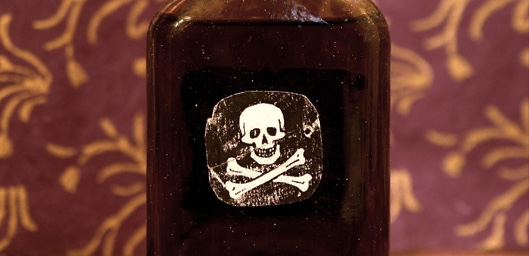
Stephanie sat in the worn-out holding area of the police station, waiting for the nice young man who had arrested her. She had plenty of time to think about the events of the last few months.
She was a respectable seventy-eight-year-old woman. In her younger years she’d worked at the local biscuit factory, starting on boxes at sixteen, fresh out of school. By twenty she’d moved onto packing custard creams. The production line where she met Fred, her late husband. They married when she was twenty-one and had three children by twenty-six. Unlike most women she worked with, she returned after each baby, leaving the children with their grandmother. She moved through departments until she became supervisor of the entire packing floor. Quite an achievement. Her retirement party had been a right old knees-up.
But that was twelve years ago.
Since then she had nursed Fred through the inevitable, saying goodbye just five short years after they’d retired. They’d hoped for country walks, cream teas, bike rides — that sort of thing. They’d bought a bungalow with a view over the fields, but it wasn’t the same after Fred died. Stephanie rattled around the house alone. She joined groups for old people, but the problem was that they were full of old people, and she did not consider herself old. She was fit and athletic (for her age), and the others simply couldn’t keep up.
Then she met Chris — or Biggsy, as he was better known. He worked part-time at the leisure centre and had seen her play tennis. He asked if she fancied a match. That’s how it began: an innocent game of tennis.
Stephanie enjoyed Biggsy’s company. He made her feel young again. He lived in a mobile home on the edge of the village with Jellybean, his jack-rustle dog. He supplemented his measly leisure-centre income by supplying rural drug users with what he casually called “their medication”. Having worked in biscuits all her life, Stephanie felt she understood addiction and didn’t object to Biggsy’s line of work. After all, he was providing a service to the local community, and learning about the produce made her feel positively youthful.
She learned about weed — even tried a little, once, before deciding it wasn’t worth repeating. She learned about ecstasy, fashionable in the nineties and still popular during festival season. She learned about amphetamines to keep you awake, and steroids to enhance muscles. These were generally sold to the same people she saw working out at the leisure centre. And to be fair, Stephanie thought they all looked pretty fit (in both senses of the word).
She didn’t start out with a plan. She just knew she was sick of her little team of oldies losing everything. Tennis, badminton, volleyball, lawn bowls, walking cricket — they sucked. The team were all losers, apart from Stephanie, who had the sporting prowess of a woman thirty years younger.
At first it was speed. It didn’t take much to wake up the old fuddy-duddies — just a little powdered pill slipped into the pre-match cup of tea. Stephanie was astonished by the results. Gerald stayed awake for an entire game of cricket. Maureen walked so fast she had to get her shoes resoled. Stephanie liked winning. It gave her a buzz.
She started inviting the team back to the bungalow for sandwiches after each meet-up. These were special sandwiches: cheese and cucumber, ham and pickle, coronation chicken — the works. All enhanced with a sprinkling of anabolic steroids.
It took six weeks to see the results, and they were spectacular. The over-60s competition cups and trophies were theirs for the taking. Stephanie had never experienced winning like it. By the end of the season the team were high on success (and drugs), so she decided to throw a party. Fuelled with amphetamines and strong liquor, they partied like they were in their early twenties — but went home by nine, because habits form over time and nine p.m. is a reasonable time to go to bed.
Stephanie had no way of knowing that Brian, Dave, Emma and Viv were all taking prescription drugs for arthritis. Nor did she realise the contraindications that caused the internal bleeding. It was all a bit unfortunate.
Biggsy had been taken in first. The police had turned a blind eye to his misdemeanors for years, but a quadruple death with the same drug was something they couldn’t ignore. He was too easy to track down. Stephanie sat in the waiting room cursing his lack of discretion. He’d said he had more life to live than her and wasn’t prepared to take the fall for her stupidity. Stephanie thought this rather callous, but probably fair.
She wondered what prison would be like. She hadn’t intended to kill four people. She just liked winning.
Stephanie is the sort of character who at once leaps off the page and yet is the kind of person you would sit next to quietly on the bus, none the wiser about just the sort of things she gets up to. So many turns of phrase in this gem of a story cannot help but make one smile.
JC Niala
Alchemy of a different kind is evident in this original and unexpected tale. It has a clear and intriguing opening that immediately places the reader into the story. Stephanie is an engaging and unpredictable protagonist.
Amanda O’Callaghan
Clare Williams is a drama educator and arts faculty lead based in Luxembourg. Both her real world and fantasy world work draw on years spent directing youth theatre and listening closely to the inner weather of young people. She attempts to write brief, bright stories shaped by the quiet strangeness of ordinary life drawing on two decades of teaching, directing youth theatre, and championing inclusive creative practice.

