
Diane recognized Daniel’s right hand at first sight.
Palm down, the fingers slightly curled, the index finger’s nail was flatter than the others. Five years ago, he had his hand bruised after a fall on the bathroom floor. There was also the pale burn on the wrist, like a carp swinging its way through the water.
Across the table, the man noticed where she was looking and pulled the sleeve down.
‘Sorry,’ Diane tried to focus on the window.
His face was narrow, narrower than Daniel’s. His eyes were gray with a sense of fear.
‘It’s all right.’
A nurse strode into the room, placing a little piece of registration sheet on the wooden table covered with dust, on which an unfamiliar signature was written poorly, as if the hand wasn’t moving fluently.
‘Ten minutes, please use the recipient’s officially registered name. Physical contact requires mutual consent. Involuntary movement, retained reflex, and procedural memory do not show signs of personal continuation.’
She looked at Diane, and sighed.
‘I understand.’
The nurse left.
The man’s name was Sebastian Ward. Diane had repeated it to herself on the train, in the lobby, in the lift, and once again in this room. Sebastian Ward. Sebastian Ward. Sebastian Ward. The brain belonged to Sebastian. The memories belonged to Sebastian. The law had declared Daniel dead a month ago, before the surgeons had joined Daniel’s healthy body to the only part of Sebastian that still survives.
Still, she could sense Daniel’s left knee shaking beneath the table.
He used to do that in restaurants when the service was slow.
Sebastian pressed his hand on the knee, trying to make it stop for a while.
‘Does it hurt?’ Diane asked.
‘Not really.’
‘It was injured when he was 23.’
‘I know, thanks.’
Of course he would know. The hospital had given him the complete copy of physical history: allergies, surgeries, bruises, the scar, the pin in the left ankle. Perhaps Sebastian knew even more about this body than Daniel did.
‘My wife is outside,’ Sebastian said. He flexed the fingers one by one, then closed them into a fist with effort. Through the colored glass, a woman in gray looked up from the corridor. She was younger than Diane. She lifted two fingers. Sebastian lifted two in the identical way, unfamiliar to Diane.
‘I didn’t know,’ Diane said.
‘She doesn’t like these visits.’
‘This is the only one.’
‘I know.’
Diane had prepared hundreds of questions. She had written them on a little notebook and checked them almost every day: whether he still hated bitter gourd, whether he slept on his left side, whether Daniel’s scar still ached before the rain. They all seemed rude now.
Staring at the mottled floor, she just muttered ‘Are you able to walk?’
‘With a cane, but not so far, probably just around the block’
‘He always leaned a little to the left.’
‘I know that too.’
Sebastian said it plainly without anger. Still, his hand seemed to fold into a fist again, only making the mark left by wearing the ring more visible.
‘I won’t ask you to do anything,’
‘Thank you.’
‘I know you aren’t him.’
For the first time, he looked towards her, but only raising his eyebrows.
She placed both hands in her lap. Now Diane could only see the same floor decorations she had witnessed a month ago, the last time she had seen Daniel as a whole. ‘Could I hold your hand? Just once, I won’t ask anything else.’
‘No.’
Sebastian’s answer was immediate. Diane just nodded. She had promised herself she would accept whatever he said. Yes, whatever he said. She concentrated on breathing normally. After a moment, Sebastian asked, ‘Why?’
She could have said that Daniel’s hands had tied her shoes when she was pregnant and unable to bend down. They had cut mangoes, washed grapes, or held a book to read stories for her when they were both teenagers.
Instead, she said plainly, ‘The last time I held it, it was cold.’
Sebastian looked at his hand.
For a while, the room remained silent. Sebastian looked around, then had his gaze fixed upon his body again.
‘People kept recognizing parts of me,’ he said. ‘A nurse knew the scar on my shoulder. Daniel’s brother asked if he could see my back. You know how my knee moves.’
‘I’m sorry.’
‘Sometimes I don’t know what they gave me.’
Diane had no answer.
A light above the door turned amber. One minute remained.
Sebastian pushed his chair back. With both palms upon the table, he gradually stood up: first his shoulders, then his back, and finally his shaking knees. Diane stood up too.
The right hand slipped down from the edge of the table. For a moment it hung between them, fingers open. The wrist turned slightly toward her, and Diane lifted her hand without deciding to. Catching his own wrist with his left hand and pulling it against his chest, Sebastian stumbled back.
‘I didn’t mean to—’ Sebastian said. He stopped. ‘I don’t, I don’t really know what that was.’
Diane’s hand remained in the air.
‘Neither do I,’ she said.
The light above the door turned red.
Sebastian released his wrist. He turned slowly.
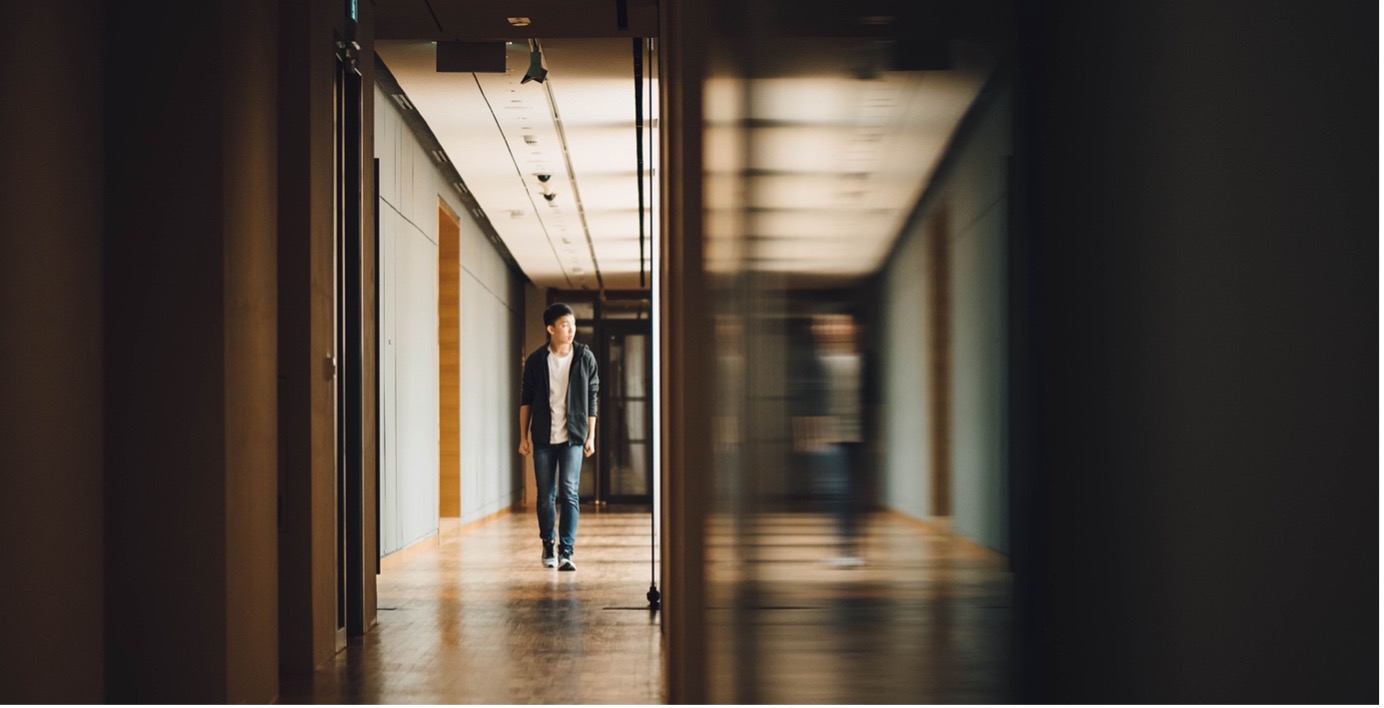
At the doorway, he grabbed the cane the nurse had left. His right foot landed too far forward; the left leg could only be dragged. Sebastian stopped, breathed heavily, and started again.
Diane watched the familiar slope of the shoulders move, growing distant. He made his way down the corridor slowly, one hand against the wall. His left foot began to fall half a beat behind the right. The shoe brushed the floor before each step. There was a pause, then two quick beats following closely.
Diane sat down again. She listened to the uneven footsteps she had known for twenty years ago grow faint at the end of the hallway.
‘A chilling, futuristic theme handled with sophistication. Narrative tension is very well developed in this powerful story. Although ‘The Visit’ presents the reader with a medical marvel, the tale retains a strong sense of humanity and deep loss. Moving and impressive.’
Amanda O’Callaghan
‘The tenderness that hovers throughout this story heightens its moving plot despite its underlying unsettling tension.’
JC Niala
Letian Cheng is a student and writer from China. He writes speculative fiction and plays exploring philosophy, identity, and the strange assumptions that shape everyday life.

