Oxford Prize: She writes herself a different life by Susan Wigmore

One in which her mother doesn’t die tragically giving birth even though it means sacrificing any likeness to Mary Shelley. One in which her father spends weekends at home (like other dads) instead of showing people Grand-Design houses he wants himself. One in which her older brother isn’t in his room all day listening to Dark Side of the Moon but takes her cycling on the bike she’s cleaning now, upturned on the drive, just as a red car motors up the cul-de-sac towards her house, the one right at the end with the navy front door as if the road leads here and only here and the car has come for her.

It stops. Engine idling. Time tick, ticking over.
And her narrative trajectory goes into freefall, spiralling wordlessly —

until grabbed by
a gravitational pull so strong she’s like a moon compelled to orbit an unknown planet. 

Because this is where she gets in the car. 
Because yes, she would like to go for a spin and the driver looks so hauntingly familiar, like a wayward maiden aunt she didn’t know she had, with a snake tail necklace, fringing on her jacket and two Diet Cokes up front. (Though they need something stronger, the woman says, now she’s old enough, if not quite legally, to make the world spin.)

If the girl had vocabulary enough, she’d say planetary gears in the car’s transmission keep it moving optimally, but the best she can manage is it floats. So they float to the Spar on the edge of town where the woman hands her a Take That tote; she’ll need it, though she won’t be shopping exactly. And while the woman talks rum with the shopkeeper, the girl takes chicken sandwiches and crisps and fat black grapes, mindless of a business owner’s need to balance the books.

They picnic by the reservoir in long, summer-scented grass beyond a danger sign. Arctic terns swoop over the water. Just passing through, says the woman with tanned feet so effortlessly bare. There’s Bacardi and Coke in paper cups and the lurch of the world. Splashes of sunshine through trees bright as revelations. 

And there’s the time it takes the girl to unbuckle her sandals. 

Because here is where she realises something of Mary Shelley might yet linger in the narrative of her life. So she swims, naked, slick-skinned, rising through rings on the water’s surface to take oxygen from the air, warmed by rum and the thrill of drinking it despite knowing, for now at least, the road leads home. 

Other than the angle of the sun, nothing has changed in the cul-de-sac when the red car pulls up at the kerb. The bike is how she left it and she spins its front wheel like a game of chance at the fair, letting it whir to a stop before tossing her sandals in the bin. She knows without seeing the woman is watching, knows without hearing the car is floating away. And she walks back into her old life, the one in which no one has noticed her absence, bare feet on cool grass, cotton dress awry, the touch of a hand still warm on her arm. 


Both a ghost story and a familial love story, “She Writes Herself a Different Life” perfectly captures the sweet, wild places grief may take us.

Deesha Philyaw

This queer awakening is a gem. A beguiling aunt lookalike stops by in a red car and offers a ride and a picnic. This quick detour from life’s routines results in a transformed internal life—a metamorphosis that does not require a witness.

Avi Ben-Zeev

The 2024 summer short-list

We are thrilled to announce our short list for the summer Oxford Flash Fiction Prize 2024 in partnership with the Bodleian Libraries’ Kafka: Making of an Icon exhibition at the University of Oxford.

If your story is listed, please do not identify which story belongs to you, as the judges are hard at work making their decisions.

SHORT LISTED STORIES

  • According to Wikipedia, Most Damselflies Emerge in Cool, Daytime Conditions
  • Amusement park dad
  • An unlikely awakening
  • Choose your animal
  • Corvids
  • Growing pains
  • Here is a slide
  • His bones
  • Hold
  • In bed with Tesla
  • Inheritance
  • It’s June in Kentucky, and Bob’s trucking through on I-65
  • Kitchen conversations
  • Light pressure
  • Lost and found in Clapham
  • More sky than anywhere
  • Nebulated
  • Northbound
  • She writes herself a different life
  • The experience machine
  • The Extemporal Haberdashery
  • The glory
  • The life cycle of frogs
  • The worst case scenario
  • Three cornered hat
  • Wanted: Pregnant woman seeks dunnock, parenting experience preferred
  • What storms may come
  • When the stork brought Eliza a rock instead of a baby

Those on the short list will be awarded publication in our next anthology and a workshop with The Flash Cabin.

We will be announcing the winners in a few week’s time, so watch this space!


Join us! Words of Wonder day and anthology launch – 26 October | 11-4pm

Join us for the anthology launch! On 26 October, the Bodleian Libraries will hold a day event in Oxford called Words of Wonder. During the day (time to be confirmed), we will be celebrating the launch of the anthology with readings, prizes and more. There will also be hands-on activities in this celebration of the wonder of words: experiment with words through collage, black-out poetry, and hanging lines of literature; have a blind date with a book; create and recreate stories with collaborative writing and narrative games; and take a tour of Kafka: Making of an Icon and print your own themed keepsake.

Let us know if you want to join us in person or online by registering your interest and we will keep you up-to-date and send you the invite link.

The 2024 summer long-list

We are thrilled to announce our long list for the summer Oxford Flash Fiction Prize 2024 in partnership with the Bodleian Libraries’ Kafka: Making of an Icon exhibition at the University of Oxford.

Congratulations to all of the authors who reached the list and for all those who entered this round. As always, we saw a wonderful range of genres, topics and stories from all over the world, and it was hugely competitive. Many wonderful stories just missed the final list and for those we have permission to email – we will be letting you know! 

If your story is listed, please do not identify which story belongs to you, as the judges are hard at work making their decisions. We will be in touch with those on the list.

LONG LISTED STORIES

  • A face like no other
  • A house we can both live in  
  • According to Wikipedia, Most Damselflies Emerge in Cool, Daytime Conditions
  • Amusement park dad
  • An unlikely awakening
  • Besieged bodies
  • Cafe terrace at night
  • Choose your animal
  • Corvids
  • Cuckoos
  • Drunk, he falls backward into the flow of time
  • Ever westward
  • Growing pains
  • Here is a slide
  • His bones
  • Hold
  • Home is where the heart used to be
  • In bed with Tesla
  • Inheritance
  • It’s June in Kentucky, and Bob’s trucking through on I-65
  • Kitchen conversations
  • Light pressure
  • Lost and found in Clapham
  • More sky than anywhere
  • Nebulated
  • Northbound
  • One hundred days of the Irishman
  • Picasso was a dick
  • Scatter Plot of Loss
  • She writes herself a different life
  • The experience machine
  • The Extemporal Haberdashery
  • The glory
  • The indignity of old wright
  • The life cycle of frogs
  • The puppy
  • The tube transforms
  • The worst case scenario
  • Three cornered hat
  • Wanted: Pregnant woman seeks dunnock, parenting experience preferred
  • What storms may come
  • When the stork brought Eliza a rock instead of a baby
  • Whispers of the Vaal
  • Willie

In the next few weeks, we will be announcing our shortlist, who will be awarded publication in our next anthology and a workshop with The Flash Cabin.

So watch this space! 

Our next competition will be opening on the 1 June 2025. So if you don’t find yourself on this list, we hope you’ll try again in our next competition and keep crafting.

Words of Wonder day and anthology launch – 26 October | 11-4pm

Join us for the anthology launch! On 26 October, the Bodleian Libraries will hold a day event in Oxford called Words of Wonder. During the day, we will be celebrating the launch of the anthology with readings, prizes and more. There will also be hands-on activities in this celebration of the wonder of words: experiment with words through collage, black-out poetry, and hanging lines of literature; have a blind date with a book; create and recreate stories with collaborative writing and narrative games; and take a tour of Kafka: Making of an Icon and print your own themed keepsake.

Let us know if you want to join us in person or online by registering your interest and we will keep you up-to-date and send you the invite link.

As The Deer Watched by Anne Falkowski

When the baby inside me was no bigger than a bean, deer began eating out of my hand. Well, only one deer and it was a carrot I stored in my jean pocket before I set out on my daily hike. Actually, there were two deer. Only one ate out of my hand. The other watched. I sensed the watcher might have been in charge. Or had more self-control. When I found out I was pregnant, it wasn’t a shock. You hadn’t pulled out, the way we’ve played it since college, and then you went UH OH. You’ve only said that twice before. And I said: ‘REALLY, I’m too old. I just got grooving in my career and we don’t need another baby. The ones we have can finally fend for themselves. Get their own juice, put themselves to bed. Stuff like that.’ You shrugged; your naked-self sprawled on our pillow. You curled yourself around me. ‘Don’t worry. I’ve got your back,’ you said. When I found out I was pregnant, I pretended not to notice that you began staying up later than me, drinking Wild Turkey while watching YouTube videos. Emptying one bottle a week and then one bottle every three days. It wasn’t a total surprise. ‘MAGNIFICENT!’ I said, as they cracked when I threw them in the recycling. The deer never came up to me before the pregnancy. I’d seen them many times of course. That’s why I sprayed myself with DEET. You know. Ticks. But you didn’t pull out and now their white tails aren’t bouncing away; they stop and stare at me as if they have something to say. Why did you do this now? At this time in your life? Why did you get yourself knocked up? Who says knocked up anymore? The deer who likes to watch, maybe is the one in control, and says this to the other one. I’m kind of surprised how judgmental deer can be. Maybe they’ve been together a long time and now bring out the worst in each other.  I suspect they know I’m no longer making healthy kale smoothies. Instead, I’m eating toast with butter. It’s the only thing I can keep down. (Well, the wine.)  Gluten and dairy. Can’t be good, the deer says, but after he takes the carrot in his long teeth. I Imagine the fetus as big as a bean curled with unformed fists resting under his own cheek. I imagine the fetus has teeth and wiry dark hairs like the bucks. I know this is not feasible. 

I started drinking again, not in a problematic way. A glass of chardonnay with dinner. Maybe a glass and a half. My mother’s mouth was smug when she said, ‘You are the only person I know who starts drinking in the first trimester. Don’t think I’ll help out as much with this one. I’m not as young as I used to be.’ I hadn’t smoked since my early twenties, but then and there I wanted an after-dinner cigarette. Maybe this was taking things too far. 

My hikes began by walking up a hill. Some say the hill is too steep to start from. Take another path. My blood grew hot, and the volume felt like it swelled too big to be contained by my veins. Blood is blue until it hits air, then it is corpuscular red. Last time you were watching a YouTube video, you were straight-faced and whisky breathed when you told me not to hike in the woods alone anymore. You said you saw this video where a hunter got attacked by two deer. ‘HONESTLY!’ I said. I put a hand over my mouth. Another on my belly. I could barely stifle my giggle.

The next day, as I puffed up the hill, I could barely wait to tell the deer about how silly you are. Thinking they would harm me. Maybe if I doused myself in deer pee like the guy who made the video. I had to look it up and show you it was staged. Maybe you are losing it? I hear shots in the distance. One and then another. Hunters I suspect. Like the one who covered himself in deer pee so they would fight him. The leaves are falling at a fast rate. They are at the stage where they are bright yellows and reds, coating the ground. I see their hearty veins rise from soft matter. Weeks away from breaking down into brown organic ground cover. When the abdominal cramping begins, I know immediately what’s happening. I grab my belly. I say out loud ‘OH NO!’ I lose my footing on some rocks and catch myself with one arm. Standing back up, I want to peel down my pants right there and then and see for myself if there’s any blood. I don’t want there to be any blood. It is right then that I hear one of the deer snort. A warning. I turn myself and face the two of them. The shy one in the back. They both stare me down. There are no other sounds except for the wind. The one in front stamps his front hoof as if to tell me something important. As if to wake me from a dream. I want to tell you something important. I’m scared. 


This story parallels the observance of deer with the anxious possibility of parenthood. This device is used to play with our perspective. The author is asking for close observance of nature but also the way our human nature is tested when a woman has to consider the way their life will change after the birth of a newborn. There are poetic lines that can be attributed to both the speaker and the observance of deer. Such as: “Some say the hill is too steep to start from.” These delicate insights are scattered across the text and help us understand the internal world of our protagonist while fully embedded in reality.

Nick Makoha

I love the way this story invokes magical realism to tell a nuanced tale about a woman coming to terms with a pregnancy.  The more times I read it, the more the voice grew on me; through one short story, we shift through multiple moods and watch the character move into new territory, both physically and psychologically.

Ingrid Jendrzejewski

Gambar oleh Rinnie Deer dari Pixabay

Jigsaw Pieces by Susan L. Edser

11

I feel the woman’s gaze infiltrate me, as she looks for secrets that only she suspects. There is a tension, which is held by the birdsong that drifts between us. 

‘I heard you sing,’ she says. 

I am awkward and notice heat reddening my cheeks. I’m at that age when my body is growing at different rates and in ways that make me self-conscious. The garden is my private space, my retreat, to which no one is invited. She has found a way here, from across the hedge, from her private space. I hesitate in my response, uncertain how to talk to this adult, so I just smile and walk off to an area where she can’t reach me. 

29 

‘You remember Mrs Cotton, don’t you?’ my mother says. 

I have a vague memory and ask if she means the old neighbour from my childhood home. 

‘Yes, Mrs Cotton and Miss Richards.’ 

I am surprised, but somehow not.  

‘No one said anything, but everyone knew,’ she adds. 

Mum tells me about the women she has known who were like me. There is the PE teacher that we all suspected and mocked; there is the lady who lived up the road from my grandmother; there is the woman over the hedge and her friend. That’s what people called them then, friends. I am touched that she wants to tell me it’s okay, you are not alone: there have been others; we have known others. 

The grown-ups talk like old friends, while the cousins are a giggling mass on the faux fur rug, legs and arms entangled beneath the smoky haze. I don’t know these children, but they look like me. Our genes are from the same place, like heirlooms inherited by long-lost relatives. There are similarities between my uncle and sister, and the eldest one of their family resembles our grandfather. We play straight away, like children do before they are affected by hormones. My hand brushes against an intimate area and one of them shows her disgust. 

‘What are you? A lesbian or something?’ she says. 

I don’t know what that is, but I know the answer is no. 

36  

I ask, ‘Is Aunty Rita a lesbian?’  

‘I beg your pardon?’ he says.  

His response makes me feel six years old.  

‘Nothing,’ I say, wishing this reply will erase what has just happened. My father is offended that I have asked about his sister’s sexuality. I look away, as he looks away from me. Mum click-clacks on her knitting needles, and the silence makes her lose her rhythm for a moment. 

‘Yes,’ he says, after a short while.  

I feel like a bomb diffuser, as I choose my words carefully: red wire, blue wire. ‘Oh?’ 

He shifts in his seat and says, ‘I wasn’t prepared when you asked just then.’ I nod. Apology accepted, I think. 

‘The vicar,’ Dad said. ‘She lives with the vicar. Brenda.’  

He can’t bear to use the word.

14  

I ignore the lad in school but play with him near the local vicarage when no one else knows. He is different, like me: it is our unspoken, unwanted connection. The other teenagers bully him and if they know I spend time with him, they might bully me too, as they unravel the truth like we have been taught to unravel simultaneous equations. We must pretend to be like them, but it confuses me, to try to be a different version of myself when I don’t even know who I am yet. I have recently started my period and I know I am devastated. I just want to be a boy, because I don’t know there is another way to be.

86  

My great nephew stands in front of me, and I cannot remember his name. I share my life stories with this boy, but recent memories are harder to capture, like catching bubbles that burst on contact. I am fading and my wife holds my hand, as she kisses my eyes.  

‘I have always loved your eyes,’ she tells me, but of course, I know that; I will always remember that.  

I won’t be here soon, physically at least, and she will be left, reading my books, and walking around our garden. I will linger amongst the words and be spotted within the perennials that flower as a reminder of what we nurtured here. We will meet again in eleven years, but neither of us knows that now. 

52 

I have not seen her in such a long time, and she is now looking around my new house. We are polite, as she avoids the freshly plastered walls and negotiates the piano discarded in the centre of the lounge. We are both more interested in the outside.  

‘What do you like about gardening?’ I ask my aunt. 

‘It’s where life happens,’ she says. 

I look at her properly for the first time and see an inner serenity. The aversion I feel towards this woman evaporates like moisture transpiring off leaves. We are not so different, she and I. We have things in common that neither of us acknowledges, as she turns to go, and we kiss goodbye. 

18  

He is kissing my lips, and I am not sure what I am meant to do. I make affirmative noises because that is what I have seen on television, but it feels mechanical. I have seen other things on TV, like the two women lying in bed together and I think it is the most beautiful image in the world. They remind me of the nymphs in John William Waterhouse’s paintings, unlike the Andy Warhol parody I am living now. I will spend years with this man. I will try to fit in. I will try to be me until I conclude that being me is not fitting in. It is not being with this man. And it is not the picture on the jigsaw puzzle box I will try to replicate all these years. 


This flash presents the reader with an incomplete set of jigsaw pieces — little moments from various times in the narrator’s life — and invites the reader to piece them together and imagine the larger picture.  I love the non-linear structure and the gaps left for the reader to fill in.  I also love the way the narrator’s voice and perspective mature as she ages.

Ingrid Jendrzejewski

The truth about life is that it is a jigsaw. A spattering of events that we put together to make up a life. What the narrator realizes is that these events are despite our best attempts something that happens to us in a nonlinear fashion. There is a wonderful sense of curation as we consider not only what is presented to us but also what has been left out of the vista that is being presented before our eyes.

Nick Makoha

Business Stock photos by Vecteezy

Numbers by Tom Vowler

97

You stay up all night, watching as Tory behemoths are slain one by one, waltzing around his living room in your underwear as he sings ‘The Internationale’. It’s safe to make babies now, he says, shaping your breasts as if they are clay. 

33

Cyprus Avenue. Friends scowl a little at your haste to cohabit. But it’s the same as the song, you say (you still believe in portents). He exposes floorboards while you resuscitate the garden. Parents pronounce you a triumph. You assemble all the ingredients for a life.

3

The number of children you want. They will squabble and scream and belly-laugh. Get sick and sleep furled into one another. Come home with blooded knees and tales of near misses and you’ll pretend to breathe. They will avoid abduction and ring each other when you’re eighty and had a fall.

5

The times he tells you to stop folding down pages of books before you lose your shit. He buys bookmarks, loiters them in every room. You dream of moving through a cavernous library, making small paper triangles wherever you chose. If you’re going to compromise, it’ll be on the big things.

4

You consider the lovers you had before him. How cruelly you treated them at the end. The marriage proposals you trampled on.

50

We have to limit guests, he says. It makes no sense to lavish all that free food and wine on a school friend you haven’t seen for a decade. No, you think, far better his moronic friends from golf attend. (You laugh with his younger socialist self at his new hobby.)

1

The number of breasts your mother exits the world with.

1,000,000

The number of Earths that can fit into the Sun. You think about this when you want to feel small. 

14

The times each week you check for a lump.

-3°

A honeymoon in Reykjavik. You are blue from the spa, skin shrunk taut, and it is back in the boutique shower with its rose head spray that you find one.

7

Days spent waiting for the test results. 

100

Bolts of lightning striking Earth each second. Yet she turns in spite of the onslaught.

8

The hours you’re not allowed food before the procedure. They remove both unhealthy and healthy tissue. You’re told you’ll receive a pathology report, detailing the characteristics of the mass. 

400

After the surgery, you learn to play chess on your laptop. It astonishes you, the possible positions on the board after just one move each. The moves are simple, yet the game seems infinite in its depth. One day you play an old Korean man, the next a girl in Brazil. Despite the pain and nausea, the games furnish you with the disembodiment you crave.

46

You ask him to stop, your body recoiling, but he continues, for long seconds, hoping the momentum crescendos, a tipping point reached where you’ll yield. When he does finally quit, there’s a scene and before you head to the spare room, he tells you how many days it’s been. 

6

The times he says he still loves you before you return the phrase, if only to fill the silence. Relief flares on his face like an acquittal.

9

To one. The odds of a new tumour appearing in the next ten years.

10

The days of a vipassana you attend in Nagpur, where time morphs and spins and clusters. They say many don’t make it to the end, the mind insane for stimulation. It is deep into a 6am meditation, facing the same mottled point on the ashram’s wall, that you decide to leave him.

0

The number of children you have. Who will ring around, you think, when you’ve had a fall?

93

Your mother’s mother, bowing out a nonagenarian, the curse skipping a generation, like a foxglove lying dormant for a season.

8

The agent hands you the keys. It’s a little damp, he says, but it has a courtyard, which you sit in once he’s left, removing your socks and shoes, the few fronds to penetrate the gravel bisecting your toes. The upstairs neighbours are in the foothills of an argument; laughter unspools from a nearby playground. You consider another cuspal period in your life, relish being ‘estranged’, remember that the light now warming your face left the sun eight minutes ago. Unpacking, you open a book, turn down a page’s corner.


The use of numbers works on many levels first as a form but more importantly, it reveals the idiosyncrasies of the character. The numbers also act as a speed device moving us back and forth through time allowing us to fuse all these vignettes into one thought.

Nick Makoha

This piece approaches a common theme from a unique perspective, filtering a very personal story through the numbers and figures encountered by the main character on her journey.  I love the experiment with form, and I also love the way the use of the second person ‘you’ makes the story feel all the more urgent and personal.

Ingrid Jendrzejewski

New Voice Award: Eomma, where are we going? By Yossi Eun-Chong Rosen

Eomma says it is time for bed. Eomma makes me pee in the urinal outside. Appa is asleep. The blanket hugs me. Eomma kisses my forehead. The candle dies.  

I can’t sleep tonight. The sheets are cold. My eyes are open. The moon is in the window. 

Eomma packs me potatoes for school. One, two, three in the burlap sack. At lunchtime, they stick to my throat.

Teacher makes us say his name again. She writes it on the chalkboard in long, thin strokes: 김정일. Kim Jong Il. His face is above the chalkboard. He looks like harabeoji. White hair. Soft eyes. He is our dear leader. Teacher is happy. 

When I get home, the sky is many colors. The bough murmurs. Unflowered.

Eomma is sad. 

She doesn’t see me. 

Appa. Appa. Appa. 

My mind is loud. My face is wet. 

Eomma tells me she will be gone. She will look for Appa. 

She tucks me in the warm cover. 

She touches my face. 

Her hands are warm. My eyes are dark. 

My eyes open. The world opens. Appa is gone. Eomma is here. She puts things in the burlap sack. 

A knife glints. 

Let me touch it, Eomma. Eomma says no.

The river is white and rough. The moon is in the river. 

Eomma is wet. The bank is dry. 

The river is backwards. The moon is broken. 

The river leaves us. 

Beulokeo, Eomma says to the broker. He looks like Appa. Eomma, where is Appa?

Beulokeo talks to the soldier. Red and blue and white.

Paper. Hands. Paper. Hands. Eomma, why did you give paper?

There is no sky. The building is fat and bright. It says Chinese on it. We will sleep here, Eomma says.

Beulokeo. Paper. Hands. Paper. Hands. 

Hard floor. Soft bed. 

Eomma kisses my forehead. The blanket hugs me. 

We stoop in the truck. The building leaves us. The road is pebbled. The moon is cold. 

Consulate, Beulokeo says. He points. A building. A gate. It says Japanese on it. 

Beyond, soft land. Warm light. He smiles.

– 

The truck stops. The officers wear guns. The officers are night. 

Songhwan. Beulokeo whispers words. 

Eomma’s eyes are vague. She doesn’t see me.

I don’t want to go back, Eomma. 

The moon is cold. The officers are night.

Eomma. I don’t want to go back, Eomma.

She retrieves the knife. Clutches it. 

The moon is cold. 

The officers are night. 

We are red. 


This piece merges a poetic voice with a childlike perspective to tell this simple, haunting tale.  The prose has a beautiful cadence and flow, and I was astonished to discover that this piece was eligible for the New Voice Award. I hope to have the chance to read a lot more from this author in future!

Ingrid Jendrzejewski

The power of this story is how it takes us out of mundane existence and places the reader on an axis of a harsher perspective of life. I am particularly impressed with the use of the short line. They almost work as haikus.

Nick Makoha

The 2024 winter short-list

We are thrilled to announce our short list for the winter Oxford Flash Fiction Prize 2024.

Congratulations to all of the authors who reached the list and who will be awarded publication in our next anthology and a workshop with The Flash Cabin.

If your story is listed, please do not identify which story belongs to you, as the judges are hard at work making their decisions.

SHORT LISTED STORIES

  • Before the wind blows it all away
  • A butterfly on your neck
  • A series of questions 
  • after graduation lady macbeth goes for a job interview 
  • As the deer watched
  • Baptism
  • Enzo Zanetti 
  • Eomma, where are we going? 
  • Footfalls echo
  • Hauntings
  • Honey
  • How simple the end could be
  • In Johannesburg, there’s no power but our power. 
  • Jigsaw pieces 
  • Little Tooth
  • Numbers
  • My Stepdad is the Old Nokia Phone that Doesn’t Allow Pictures
  • Pareidolia, In Toast
  • The Phoenix
  • Reflections
  • Snow falling 
  • Sodium chloride: A user’s guide
  • The Caged Budgerigars
  • The farm in the valley
  • The view from up there
  • There is no before, there is only after
  • This Time 
  • Trespasses  
  • What a kerfuffle
  • When our sister have ulcer upset or something of that nature

Our next competition will be opening on the 1 June 2024. So if you don’t find yourself on this list, we hope you’ll try again in our next competition and keep crafting.


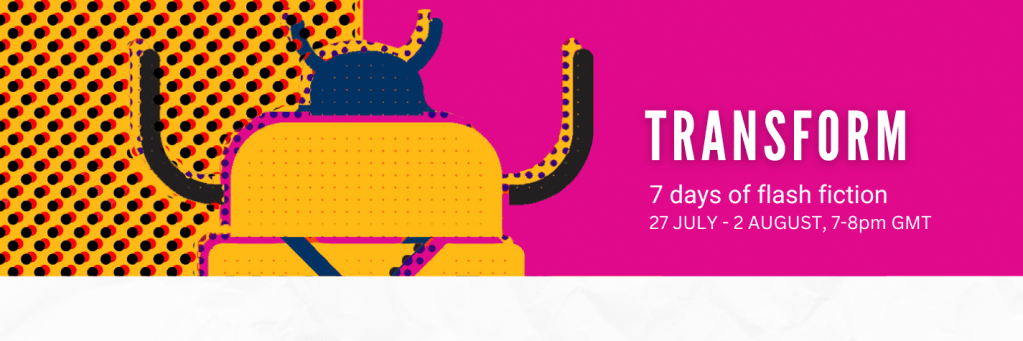
Are you looking to transform your writing practice this summer?

27 July – 2 August | 7.30pm – 8.30pm

Transform your writing habit and write a flash fiction story every day for a week with Author and Director of the Oxford Flash Fiction Prize, Freya Morris. We will be focusing on creating first drafts for the upcoming summer competition.

Find out more 

The 2024 winter long-list

We are thrilled to announce our long list for the winter Oxford Flash Fiction Prize 2024.

Congratulations to all of the authors who reached the list and for all those who entered this round. As always, we saw a wonderful range of genres, topics and stories from all over the world, and it was hugely competitive. Many wonderful stories just missed the final list and for those we have permission to email – we will be letting you know! 

If your story is listed, please do not identify which story belongs to you, as the judges are hard at work making their decisions.

LONG LISTED STORIES

  • Before the wind blows it all away
  • A butterfly on your neck
  • A great man
  • A series of questions 
  • after graduation lady macbeth goes for a job interview 
  • As the deer watched
  • Baptism 
  • Button eyes
  • Enzo Zanetti 
  • Eomma, where are we going? 
  • Footfalls echo
  • Hauntings
  • Honey
  • How simple the end could be
  • I am an island
  • In Johannesburg, there’s no power but our power. 
  • Jigsaw pieces 
  • Little Tooth
  • Numbers
  • My Stepdad is the Old Nokia Phone that Doesn’t Allow Pictures
  • Pareidolia, In Toast
  • The Phoenix
  • Reflections
  • Snow falling 
  • Sodium chloride: A user’s guide
  • The bluestone and the heather
  • The Caged Budgerigars
  • The farm in the valley
  • The view from up there
  • There is no before, there is only after
  • This Time 
  • Trespasses  
  • What a kerfuffle
  • When our sister have ulcer upset or something of that nature

In the next few weeks, we will be announcing our shortlist, who will be awarded publication in our next anthology and a workshop with The Flash Cabin.

So watch this space! 

Our next competition will be opening on the 1 June 2024. So if you don’t find yourself on this list, we hope you’ll try again in our next competition and keep crafting.

First Place: Solve the Problems that Fergus Denies he Caused by Malina Douglas

1. When Mary leads the four-year-old child, wrapped in a shawl he singed the edges of when he started a fire in the kitchen, with a bracelet around one wrist printed in shaky letters the name Fergus, to the steps of the orphanage, kisses the small exposed brow and walks away without looking behind her, to what degree will the guilt eat up her insides? 
Multiply the number of pinches by the number of tantrums and subtract from her love. 

2. If each boy in the orphanage receives seven ounces of potatoes, and seven ounces of potatoes cannot fill Fergus’ belly, how many boys must Fergus beat up to grow to his father’s height of 179 centimetres? 

3. When Fergus steps out through the workhouse doors at sixteen and three months, subtract from his feeling of elation fourteen rainy nights spent on Dublin streets, when he tracks down his mother to a crumbling tenement on Dublin’s northside, and remaining in her cupboard are four teabags and one and a half biscuits, and she justifies giving him up with seven anecdotes of his difficult behaviour, as she bites her lip and tears spill between her fingers, till she admits she has not heard from his father, or where to find him, calculate the depths to which Fergus’ mood will sink. 

4. Take the number of nights spent in fields, moors and the back of carts staring up at the sky and multiply by the number of stars visible on a clear night in Tipperary to find out the degree of yearning of Fergus for his father. 

5. Take twelve rabbits, stolen, killed, boiled and eaten, twenty pickpocketed wallets and four dozen pilfered apples. 
How many wrongs must Fergus commit to fill his inner abyss, formed by the feeling that nobody loves him? 
5b. Calculate the square root to find the number of hearts he will break. 

6. If Fergus has eyes like moss on an oak on the north side of a glade in Kilkenny, freckles on his cheeks equivalent to the number of sunny days he spent slacking off from farmwork (subtracted from an average of 168 rainy days in county Leitrim), has a laugh two semitones higher than the pitch of his father, is able to fire off three self-deprecating jokes a minute, and plays the fiddle at over 320 beats per second, how quickly will the average shopgirl fall for him? 

7. If Fergus romances Brenda on the flowering cliffs of Howth, leads Molly into the grocer’s storeroom, catches Louise behind a haystack and Evelyn in an orchard, multiply by three and divide by two outraged fathers, armed with pitchforks, who succeed in chasing Fergus away, how many cousins will Fergus’ grandson discover in Galway?

8. If each child sired by Fergus grows up not knowing their father, three quarters of them are boys, and each boy starts a family of his own that he later abandons, how many pub fights can be traced back to Fergus? 

9. If, on a rainy night in County Roscommon, Fergus walks into a pub and hears a man, twice his age, boasting that he knew how to deal with troublemakers since he sent his own son to an orphanage, and Fergus, upon asking the age of the son and adding the moss of his eyes and the freckles on his creased, ruddy cheeks, understands he is facing his father, and his anger can be calculated as the cumulative effect of thirteen years confined behind stone walls plus five years and seven months of ranging down muddy tracks, sleeping in fields and living off goods bartered and stolen, compounded by the rage inherited from his father who grew up without knowing his own father, and multiplied by four pints of Guinness and two shots of Locke’s Special Edition, what is the likelihood that Fergus will punch his father in the face? 

Write your answers on the answer sheet provided. 

Answers left blank will be penalised. 


On the one hand, a unique structure can feel gimmicky and overwhelm the story. On the other hand, you get a story like this. Here, the hermit crab form and the white spaces are used to brilliant effect in this stonkingly good piece, which tells the colourful story of a young man called Fergus. This is an intimate, yet expansive piece that covers an entire lifetime (and more), and the prose is inventive, layered and full of heart. Bravo!  

Farhana Khalique

This clever and ingeniously-structured story fits in a novel’s worth of drama, and does so with wit and humour. The form lends itself to narrative traction, and to speed, but it’s beautifully-handled in the way the story moves between what ‘happens’ and its various emotional, social and generational ramifications. It’s funny and sad and above all done with lightness – the narrator has been sufficiently distanced by the choice of the form to leave the reader on their own in all the best ways. 

Patrick McGuinness

Malina Douglas is inspired by the encounters that shape us. She was awarded Editor’s Choice in the Hammond House International Literary Prize and longlisted for the Reflex Press Prize and the Bath Short Story Prize in 2022. In 2023 she was longlisted for the Bristol Prize and made the top three of the Leicester Writes Prize. Publications include the National Flash Fiction Day Anthology, WestWord Journal from Retreat West, Typehouse, Cast of Wonders, Wyldblood, Ellipsis Zine, Teach Write, Consequence Forum, and Because That’s Where Your Heart Is from Sans Press. Her shortlisted writing was published by Blackwater Press and Desire to Escape from Four Palaces Press. She is an alumna of Smokelong Summer and can be found on twitter @iridescentwords.e after an early story was a winner in CityTV’s Vancouver’s Story Initiatives. Works include two short-listings for the 2022 Masters Review Anthology and Masters Review flash fiction prizes, a finalist for the 2022 Tobias Wolff award, and a long-listing for the 2022 Bath Flash and 2022 Fish Flash Fiction Prize, while two were given honorable mentions in the Lorian Hemmingway & Writer’s Digest Short Story Competitions. Her writing has been or will be published in the Bath flash-fiction anthology, ScribbleLit, Recalling the Journey Anthology, 101.Org & Blue Mountain Review.

She can be found at @meaning_filled on Twitter.